
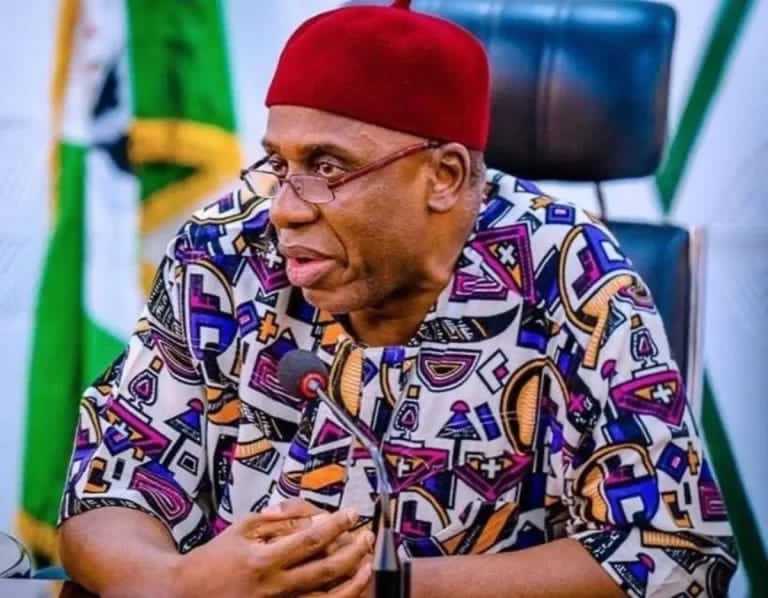
Former Minister of Transportation and chieftain of the African Democratic Congress, Rotimi Amaechi, has dismissed claims that President Bola Tinubu is responsible for the crisis facing opposition parties in Nigeria, arguing instead that the opposition is largely to blame for its own challenges.
Amaechi made the remarks while addressing a gathering at a public lecture, footage of which circulated widely on social media on Friday. In his comments, he insisted that President Tinubu should not be portrayed as politically invincible, stressing that the weakness of opposition parties is a result of their internal failures rather than the strength of the ruling party.
According to Amaechi, opposition parties have failed to offer Nigerians a credible alternative because they are preoccupied with ethnic, regional and personal power calculations. He said such priorities have taken precedence over meaningful discussions about governance, national renewal and the real concerns of citizens.
He stated that the opposition has consistently missed opportunities to engage Nigerians on issues affecting their daily lives. Instead, he said political actors often focus on narrow elite interests rather than developing a shared vision that can inspire public confidence.
Amaechi argued that conversations within opposition parties are largely limited to questions about candidates and power-sharing arrangements. He said debates tend to revolve around whether a candidate should serve one term or two terms, rather than addressing how governance would improve under an alternative administration.
In his words, Amaechi said Tinubu is not invincible and should not be treated as such. He stressed that the real challenge lies within the opposition, which he described as fragmented and disconnected from the needs of ordinary Nigerians.
He further noted that while political elites are preoccupied with strategies on how to gain access to power, citizens often end up supporting these elite ambitions without fully considering whether such moves would lead to better governance.
Amaechi suggested that this dynamic has weakened the ability of opposition parties to mobilise voters around clear policy objectives. He said the lack of ideological clarity and consistent messaging has made it difficult for the opposition to present itself as a serious alternative to the ruling party.
The former minister also pointed to what he described as a failure to prioritise national issues over sectional interests. According to him, this approach has deepened divisions and undermined efforts to build a broad-based political movement capable of winning elections.
Amaechi’s comments come amid ongoing debates about the state of Nigeria’s opposition and its readiness ahead of future elections. Several opposition parties have struggled with internal disputes, defections and leadership crises in recent years.
He said that rather than blaming President Tinubu or the ruling party for their problems, opposition figures need to engage in honest self-examination. According to Amaechi, meaningful change will only occur when opposition parties address their internal weaknesses and reconnect with the electorate.
Amaechi also disclosed that he has been actively engaging with political actors as part of preparations for the 2027 general elections. He said he has been holding meetings with various individuals and groups to discuss the possibility of building a winning political strategy ahead of the polls.
He explained that those who have met with him are aware that discussions have already begun on how the opposition could position itself more effectively for the next election cycle. According to him, these engagements are focused on exploring realistic pathways to electoral victory.
While he did not provide details of the meetings or the political platforms involved, Amaechi’s comments suggest early efforts at coalition-building and strategic planning within opposition circles.
His remarks have added to ongoing conversations about the future of opposition politics in Nigeria and the challenges facing parties outside the ruling coalition. Political analysts note that the opposition will need to overcome deep-seated divisions and present a coherent agenda if it hopes to challenge the ruling party successfully.
As the 2027 elections draw closer, Amaechi’s statements are likely to resonate within political circles, particularly among those calling for reforms and stronger unity within the opposition. His assertion that Tinubu is not invincible underscores his belief that electoral victory remains possible, provided opposition parties address their internal problems and refocus on governance and national interest.