
Enugu State’s ambitious ₦1.62 trillion 2026 budget, christened the “Budget of Renewed Momentum,” has ignited fierce public debate after social media users highlighted what they describe as glaring misplacement of priorities in healthcare spending.
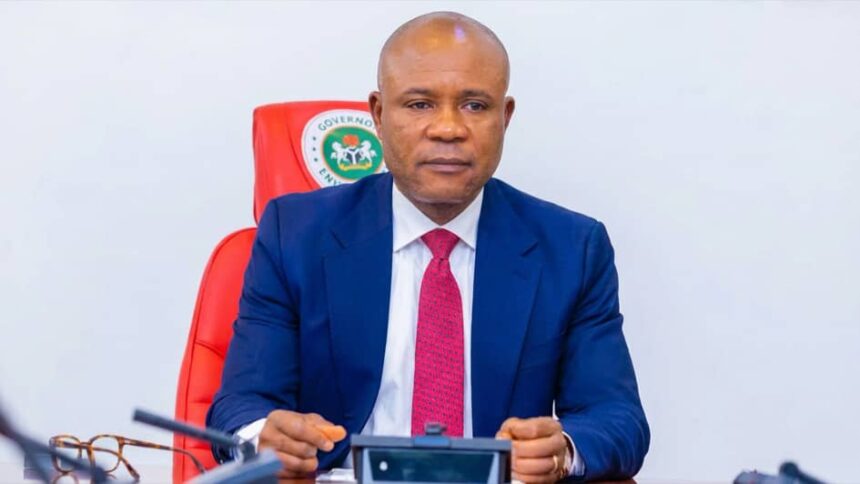
Governor Peter Mbah presented the appropriation bill to the Enugu State House of Assembly in early December 2025, and it was signed into law shortly afterward.
The budget marks a significant leap from the previous year’s revised figure, with 80%—approximately ₦1.3 trillion—dedicated to capital expenditure aimed at accelerating infrastructure, economic growth, and the state’s long-term goal of expanding its economy to $30 billion.
Education once again commands the largest sectoral share at over 32%, reflecting the administration’s sustained focus on human capital development through smart schools and related programs.
Yet the budget’s most explosive controversy stems from specific line items that critics argue reveal a troubling disconnect between elite-driven ambitions and the everyday needs of ordinary residents.
Social media analysis, particularly a widely circulated post, pointed out that ₦115 billion was earmarked for office furniture and fittings across government ministries and agencies.
Another ₦21 billion was allocated for vehicles, including plans to procure around 2,000 sedans to support youth empowerment, security operations, and urban mobility.
Perhaps most strikingly, the budget sets aside ₦35 billion for the acquisition of 14 additional aircraft in 2026 to expand the fleet of Enugu Air—the state’s fledgling commercial airline—from its current size (projected to reach six by late 2025) to a total of 20 planes.
Proponents of the airline project view it as a strategic economic enabler, positioning Enugu as a regional aviation and logistics hub to boost trade, tourism, and connectivity.
In sharp contrast, the allocation for drugs, laboratory reagents, and essential medical supplies across the state’s healthcare facilities stands at just ₦679 million.
With Enugu’s population estimated at roughly 4.7 million people, this translates to less than ₦150 per resident for critical medicines and diagnostics in the coming fiscal year.
Critics have seized on this disparity to label the budget a “crime scene,” accusing the administration of prioritizing luxury, prestige projects, and infrastructure that benefits a narrow segment while shortchanging the health sector, where Nigeria already grapples with high out-of-pocket expenses and limited access to basic care.
The Mbah administration has consistently defended its approach as investment-led transformation.
Officials emphasize that the massive capital outlay—including major road networks, transport terminals, housing units, and industrial initiatives—is designed to generate long-term revenue, jobs, and improved living standards that will indirectly strengthen public services, including healthcare.
The state has recorded impressive growth in internally generated revenue in recent years, providing the fiscal space for such bold spending without relying excessively on federal allocations.
Still, the viral breakdown has fueled broader outrage online, with many Nigerians calling for greater transparency in budget implementation and urging other states to publish similar itemized details.
Questions persist about whether the projected ₦870 billion in IGR—essential to funding the budget—can be realistically achieved amid economic headwinds.
For now, the ₦1.62 trillion plan stands as both a symbol of Enugu’s aggressive development drive and a lightning rod for debates over what truly constitutes public good in resource-constrained Nigeria.
As implementation begins, citizens will be watching closely to see whether the “renewed momentum” delivers tangible improvements across all sectors—or deepens existing inequalities.