
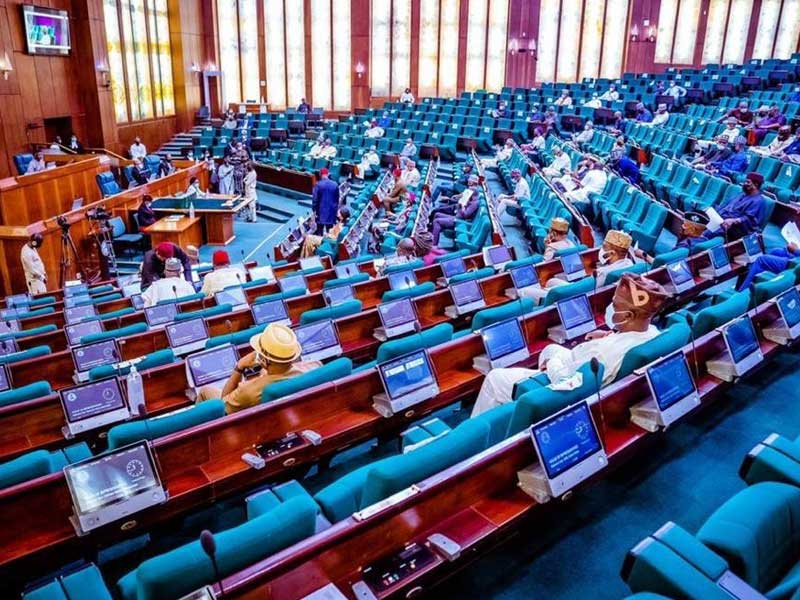
The House of Representatives has expressed its determination to introduce strong and effective legislative interventions aimed at strengthening the Economic and Financial Crimes Commission and the Nigerian Financial Intelligence Unit in the fight against financial crimes.
The commitment was made in Abuja, where lawmakers said the rising complexity of financial crimes requires a more robust legal and institutional framework to empower anti-corruption agencies to operate effectively. The House noted that economic and financial crimes continue to pose serious threats to national development and public trust.
According to the lawmakers, existing laws governing financial crime enforcement need to be reviewed and updated to reflect current realities, including the increasing use of technology and cross-border networks by criminals. They stressed that without modern and responsive legislation, enforcement agencies may struggle to keep pace with evolving criminal tactics.
The House said its planned interventions would focus on removing operational bottlenecks, improving coordination among relevant agencies and strengthening accountability mechanisms. Lawmakers emphasised that the goal is not only to enhance enforcement capacity but also to ensure transparency and respect for the rule of law.
Members of the House acknowledged the roles played by the EFCC and the NFIU in tackling corruption, money laundering and other illicit financial activities. However, they noted that both agencies face legal and institutional constraints that limit their effectiveness in some cases.
The lawmakers said legislative backing is critical to ensuring that the EFCC and NFIU have clear mandates and sufficient authority to carry out their responsibilities. They added that clearer laws would also reduce conflicts with other agencies and prevent jurisdictional overlaps that often slow down investigations.
The House noted that strengthening the NFIU is particularly important as financial intelligence plays a central role in detecting and preventing financial crimes. Lawmakers said improved access to information and stronger legal protections would enhance the unit’s ability to analyse and share intelligence with relevant authorities.
In discussing the EFCC, the House said reforms should focus on improving investigative powers, prosecutorial efficiency and asset recovery processes. Lawmakers also highlighted the need for safeguards that ensure professionalism and protect the agency from undue interference.
The House said it intends to engage key stakeholders, including anti-corruption agencies, the judiciary, financial institutions and civil society organisations, as part of the legislative process. According to lawmakers, broad consultation is necessary to produce laws that are practical, balanced and effective.
They stressed that legislative intervention is not about expanding powers arbitrarily but about creating a legal environment that supports effective crime prevention and enforcement. Lawmakers said respect for human rights and due process would remain central considerations.
The House also linked the fight against financial crimes to broader economic goals, noting that corruption and illicit financial flows discourage investment and undermine economic stability. Strengthening institutions responsible for combating these crimes was described as essential for sustainable development.
Lawmakers said Nigeria’s obligations under international anti-money laundering and counter-terrorism financing frameworks also require regular updates to domestic laws. They noted that failure to strengthen institutions could expose the country to sanctions or reputational risks.
The House reaffirmed its commitment to supporting reforms that enhance Nigeria’s anti-corruption architecture. Members said the legislature has a responsibility to provide the legal tools needed to confront financial crimes effectively.
They added that the planned legislative measures would be pursued with urgency, given the scale of economic damage caused by financial crimes. According to the House, timely and decisive action is necessary to protect public resources and strengthen governance.
As deliberations continue, the House assured Nigerians that it remains committed to playing its part in the fight against corruption. Lawmakers said with stronger laws and institutions, Nigeria would be better positioned to tackle financial crimes and promote accountability.
The House concluded by reiterating that effective legislative support for the EFCC and NFIU is essential to safeguarding the nation’s economic future. Members said they are determined to ensure that the legal framework keeps pace with the challenges posed by financial crime in a rapidly changing world.