

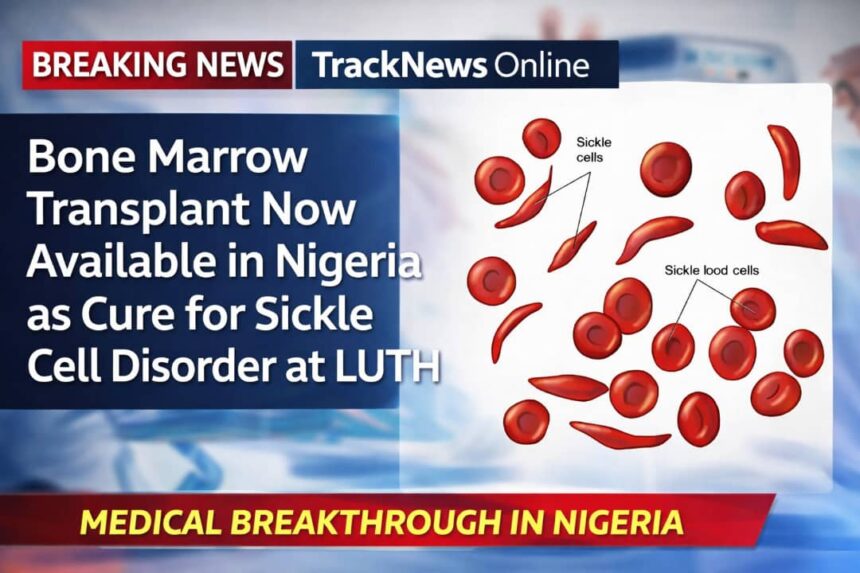
Bone marrow transplantation is now available in Nigeria as a curative treatment for sickle cell disorder at the Lagos University Teaching Hospital (LUTH). The Sickle Cell Foundation Nigeria (SCFN), in partnership with LUTH, confirmed that the program is active and has been performing procedures in the country since around 2024.
The treatment offers new hope to eligible patients living with sickle cell disorder (SCD). It is currently recognized worldwide as a proven cure for the genetic blood condition when successful. The service is now accessible to Nigerians who meet the required medical criteria.
Sickle cell disorder is an inherited condition that affects red blood cells. It causes the cells to become abnormally shaped, leading to blockages in blood vessels, severe pain episodes, infections, organ damage, and other life-threatening complications.
Nigeria carries one of the highest burdens of sickle cell disorder globally. Thousands of children are born with the condition each year, making it a major public health concern in the country.
For many years, treatment in Nigeria has focused mainly on managing symptoms. Patients have relied on medications, routine hospital care, blood transfusions, and preventive therapies to reduce complications and improve quality of life.
Bone marrow transplantation, also known as stem cell transplantation, changes that outlook for some patients. The procedure involves replacing the patient’s defective bone marrow with healthy stem cells from a compatible donor.
Once transplanted, the healthy stem cells begin producing normal red blood cells. This process can permanently eliminate the disease in patients whose transplants are successful.
Medical experts emphasize that not all patients with sickle cell disorder qualify for the procedure. Eligibility depends on several factors, including the patient’s age, overall health condition, severity of the disease, and the availability of a suitable donor.
A matching donor is often a sibling with a compatible tissue type. Doctors conduct detailed laboratory tests to confirm compatibility before approving the transplant.
The transplant process involves multiple stages. These include pre-transplant evaluations, conditioning treatment to prepare the patient’s body, the infusion of donor stem cells, and intensive post-transplant monitoring.
Patients require close supervision to manage potential complications. Recovery may take several months, and follow-up care is critical to ensure the new stem cells successfully establish themselves in the patient’s body.
The availability of this treatment in Nigeria marks a significant milestone in the country’s healthcare system. In the past, families seeking bone marrow transplantation often had to travel abroad at very high financial costs.
Local access is expected to reduce the burden on affected families. It also strengthens Nigeria’s capacity to provide advanced and specialized medical care within the country.
The Sickle Cell Foundation Nigeria has long advocated for improved treatment and awareness of the disease. Its collaboration with LUTH represents a major step toward expanding curative options for patients.
Health professionals continue to stress the importance of early diagnosis and proper disease management. Genetic counseling and routine screening remain key strategies in reducing the impact of sickle cell disorder nationwide.
While bone marrow transplantation offers a cure, it is a complex and high-risk medical procedure. Experts advise families to seek thorough medical consultation before making decisions about undergoing the treatment.
The launch and continuation of the transplant program at LUTH provide renewed hope for many Nigerians living with sickle cell disorder. For eligible patients, the availability of this cure within the country represents a life-changing development in the fight against the disease.