
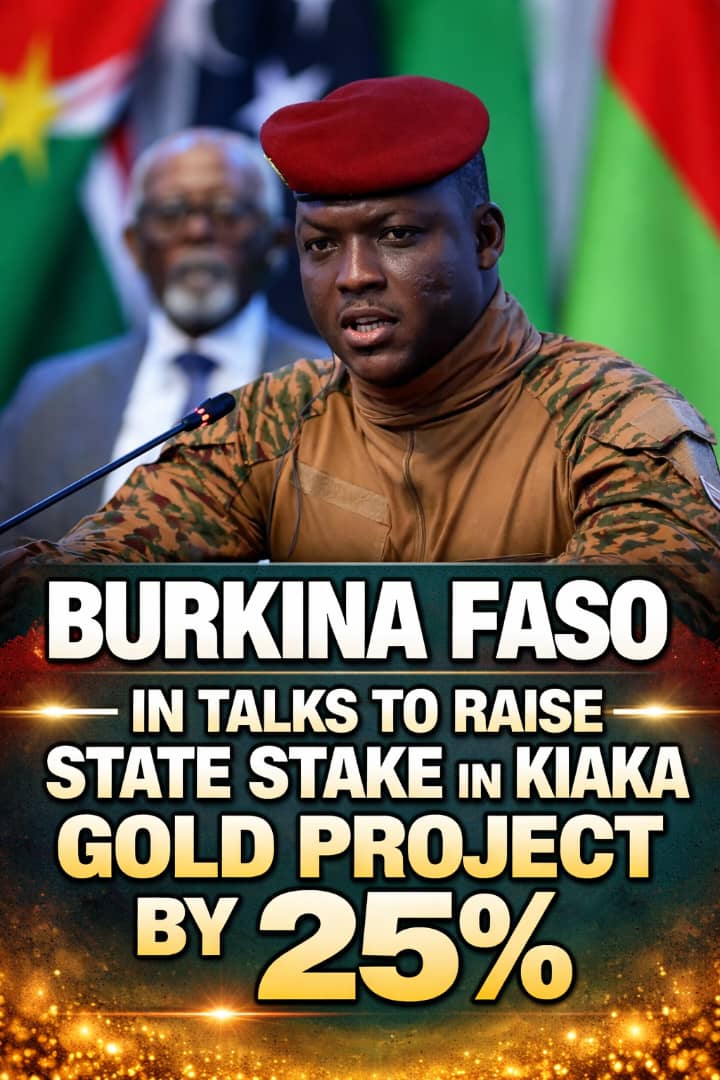
Burkina Faso’s transitional government is in discussions with West African Resources Limited to increase the state’s ownership in the Kiaka Gold Project by an additional 25 percent through its state mining company, SOPAMIB.
The negotiations form part of a broader strategy by the country’s military-led administration to expand national control over key mining assets and secure greater economic returns from mineral resources.
Officials familiar with the talks say the proposed increase would significantly raise the government’s equity position in the Kiaka project, one of the country’s major undeveloped gold assets. The project is operated by Australia-listed West African Resources Limited.
Burkina Faso is one of Africa’s leading gold producers, and mining remains a cornerstone of its economy. Gold exports account for a substantial share of foreign exchange earnings and government revenue.
Since taking power, the ruling junta has emphasized economic sovereignty and resource nationalism. Authorities have repeatedly stated their intention to renegotiate mining agreements to ensure the state captures a larger share of profits.
The discussions over Kiaka follow similar moves in other parts of the region, where governments have sought to revise mining codes, increase royalties or expand state equity participation in extractive projects.
SOPAMIB, the state-owned mining company, is expected to play a central role in acquiring the additional 25 percent stake if negotiations are successful. Details regarding valuation, financing structure and timelines have not been publicly disclosed.
West African Resources has previously highlighted the strategic importance of the Kiaka Gold Project within its portfolio. The project is considered a long-life asset with significant production potential once fully developed.
Market analysts note that any increase in state ownership could affect project economics, investor sentiment and future capital flows. However, they also point out that clearer state participation frameworks can, in some cases, provide long-term stability if terms are transparent and predictable.
Burkina Faso has faced ongoing security challenges linked to insurgent activity, which have affected parts of the country. Despite this, gold mining operations have continued to operate, with the sector remaining central to government revenue planning.
The junta has argued that expanding state control over strategic assets is necessary to fund security efforts, infrastructure development and social programs. Officials say ensuring that more value from natural resources remains within the country is a priority.
There has been no formal announcement indicating that an agreement has been finalized. Both parties are expected to continue negotiations in the coming weeks.
The outcome of the talks could signal the direction of future mining policy in Burkina Faso. Observers are closely watching whether the government will pursue similar arrangements with other international mining operators.
For now, the proposed 25 percent increase through SOPAMIB underscores the administration’s push to assert stronger national influence over the country’s mineral wealth while balancing the need to maintain foreign investment in the sector.