

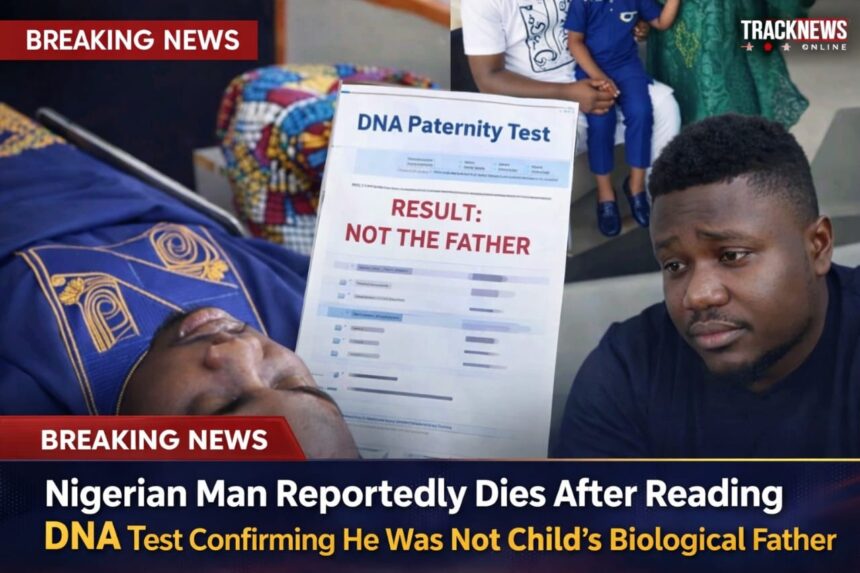
A Nigerian man has reportedly died after collapsing moments after reading DNA test results that indicated he was not the biological father of the child he had raised for years. The incident, which has been widely shared on social media, has sparked emotional reactions and renewed debate about paternity fraud in the country.
According to circulating reports, the man had been living abroad and recently returned to Nigeria following suspicions about his wife’s fidelity. The suspicions reportedly arose after he allegedly saw his wife with another man during a Snapchat video interaction. Following the incident, he demanded a paternity test to confirm whether he was the biological father of their son.
Sources claim that after the DNA test was conducted, the man received the results in an envelope. Moments after opening and reading the document, he reportedly collapsed. Efforts to revive him were unsuccessful, and he was later pronounced dead.
Images shared online show the deceased in earlier family moments, smiling alongside his wife and son. In the photographs, the family appears dressed in matching traditional attire, portraying what seemed to be a happy household.
Additional photos that later surfaced show the man lying unconscious on a stretcher inside what appears to be an ambulance. The images have intensified public reactions, with many Nigerians expressing grief and anger over the circumstances surrounding his death.
Social media platforms have been flooded with comments from users reacting to the tragedy. Many expressed sympathy for the man, while others discussed the emotional toll of discovering non-paternity after years of financial and emotional investment in a child.
Several posts highlighted the psychological trauma such revelations can cause. Some users cautioned about the emotional weight of undergoing paternity testing, particularly when suspicions involve long-term relationships and children who have already formed strong parental bonds.
The incident has also brought renewed attention to the issue of paternity fraud in Nigeria. Recent data from Smart DNA Nigeria’s 2025 annual report indicates that 25 percent of men who voluntarily underwent paternity testing received results excluding them as biological fathers. This translates to one in every four tested men receiving negative results.
Experts suggest that the rate may be even higher among men who seek testing due to existing suspicions of infidelity. The figures have raised concerns about trust and transparency within marriages and long-term relationships.
Medical professionals have also weighed in on the possible cause of the man’s sudden death. Health experts note that severe emotional shock can trigger acute medical emergencies, including cardiac arrest, particularly in individuals already dealing with stress.
Men living abroad and supporting families back home often face significant financial and psychological pressure. Physicians explain that intense emotional distress, such as receiving unexpected or devastating news, can lead to a surge in stress hormones, potentially resulting in fatal heart complications.
While the full medical details surrounding the man’s death have not been officially released, discussions around stress-induced cardiac events have gained traction online. Some commentators have called for greater mental health awareness and support for individuals undergoing emotionally charged experiences such as paternity disputes.
Legal and social analysts say the growing conversations around DNA testing reflect shifting societal attitudes. Paternity testing, once considered taboo in many communities, is becoming more common as access to testing facilities increases.
However, experts warn that the emotional and social consequences of test results can be profound. Beyond marital breakdowns, such discoveries may impact extended families, inheritance matters, and the well-being of children involved.
As reactions continue to pour in, many Nigerians are calling for counseling services to be made available to couples dealing with paternity uncertainty. Others have urged greater honesty and communication within relationships to prevent similar tragedies.
The reported death has left many questioning how such situations can be better managed to avoid fatal outcomes. It has also intensified public discourse on trust, accountability, and the emotional risks tied to uncovering long-held family secrets.
Authorities have not released an official statement regarding the incident as of the time of reporting. Meanwhile, the story continues to generate widespread attention across social media platforms nationwide.