

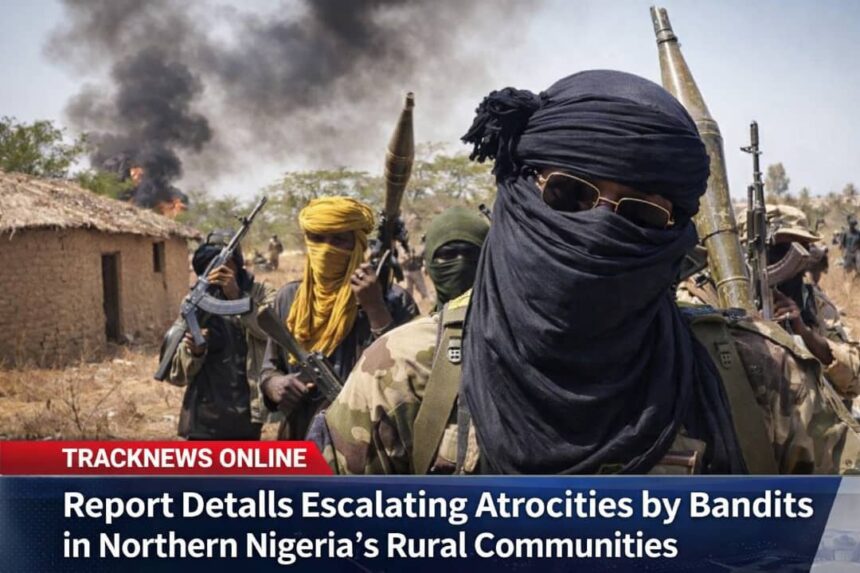
Communities across parts of Northern Nigeria are facing escalating violence as armed bandits intensify attacks on villages, with residents recounting acts of brutality that have left families traumatized and displaced.
Local accounts from affected areas describe a pattern in which gunmen raid homes and impose coercive demands on families under threat of death. According to testimonies gathered from residents and conflict monitors, some attackers allegedly order fathers to present family members at designated locations outside their villages, where assaults are carried out under duress.
Residents say refusal to comply can result in fatal reprisals, including executions or further abductions. In several communities, villagers report living in constant fear, with armed groups exerting control over surrounding forests and farmlands.
Human rights advocates and security analysts describe the situation as part of a broader crisis involving banditry, kidnapping and organized criminal activity across sections of the northwest and north-central regions. The violence has disrupted agriculture, forced school closures and displaced thousands of families.
Community leaders say the psychological impact has been severe. Families recount incidents in which parents were forced to witness violence against loved ones, deepening trauma in already vulnerable rural populations.
Security agencies have acknowledged the persistence of bandit activity in several states and have launched military and police operations aimed at dismantling armed groups. However, residents in remote areas often report delayed response times and limited security presence.
The deteriorating security situation has prompted criticism from civil society actors and commentators who argue that more coordinated action is required. Some observers have questioned whether enough attention and advocacy are being directed toward the plight of rural communities most affected by the violence.
Analysts note that public outrage tends to surge around high-profile incidents, particularly those involving interregional or ethnic tensions. However, sustained advocacy focused on remote villages battling daily insecurity is often less visible at the national level.
Humanitarian organizations warn that prolonged exposure to violence is contributing to long-term social and economic damage. Farmers have abandoned fields due to fear of attack, worsening food insecurity in already fragile areas.
Mental health professionals also highlight the psychological toll on survivors, especially children growing up in environments marked by armed intimidation and repeated trauma.
Regional leaders and traditional authorities have called for stronger collaboration between federal and state governments, as well as enhanced intelligence gathering and community policing initiatives.
While security operations continue, affected communities are urging authorities to prioritize consistent protection, rapid response mechanisms and long-term stabilization strategies.
The situation underscores the ongoing challenges Nigeria faces in addressing rural insecurity. For many residents, the immediate concern remains survival amid persistent threats.
As investigations and operations proceed, calls for accountability, sustained advocacy and comprehensive security reforms continue to grow among those seeking relief from the violence.