

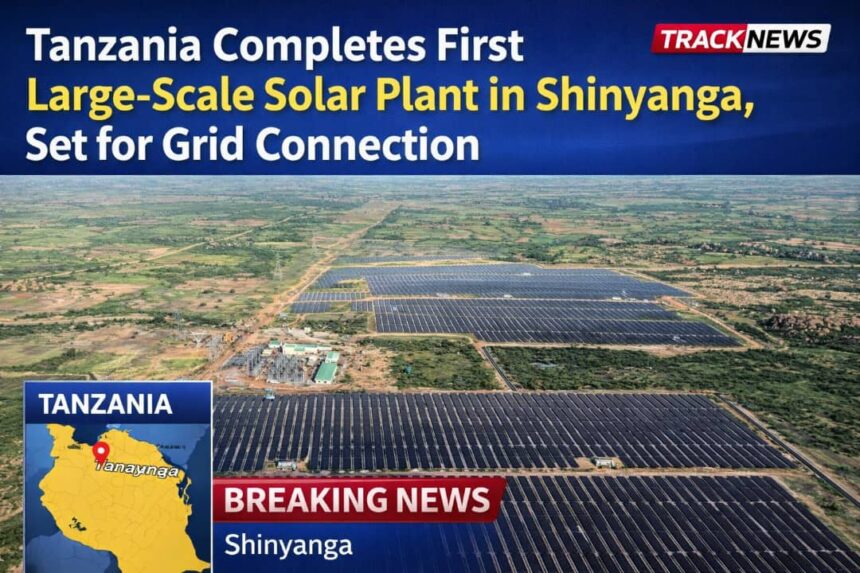
Tanzania has completed its first large-scale solar power project in Kishapu District, Shinyanga Region, marking a significant step in the country’s transition toward renewable energy.
The 50-megawatt solar plant is scheduled to be connected to the national grid by March 1, according to energy sector officials. Once operational, it is expected to enhance electricity supply and improve grid stability in the northwestern part of the country.
The project represents a milestone in Tanzania’s efforts to diversify its energy mix. While the country has traditionally relied on hydropower and natural gas for electricity generation, authorities have increasingly emphasized renewable energy development to reduce vulnerability to climate-related disruptions.
Officials say the new solar facility will contribute to improved access to reliable electricity in Shinyanga Region and surrounding areas. Enhanced power supply is expected to benefit households, small businesses and industrial activities.
Local authorities anticipate that the project will stimulate economic activity, particularly among young people engaged in mining and agriculture. Shinyanga is known for small-scale mining operations and farming, both of which depend heavily on consistent electricity supply for processing and storage.
The solar plant is also expected to create indirect employment opportunities through maintenance services, local procurement and expanded commercial activities linked to improved power access.
With the addition of the Kishapu solar facility, Tanzania’s total installed electricity generation capacity now exceeds 4,400 megawatts. This places the country among the leading electricity producers within the East African Community.
The government has been pursuing energy sector reforms aimed at expanding generation capacity and extending grid connectivity. Rural electrification programs have been accelerated in recent years to support economic inclusion and industrial growth.
Energy analysts note that incorporating solar power into the national grid can help stabilize supply during periods when hydropower output declines due to low rainfall. Diversification is viewed as essential in building resilience against climate variability.
Tanzania has set targets to increase the share of renewable energy in its overall generation mix. The completion of the Kishapu project signals progress toward meeting those objectives.
Officials have not disclosed the total cost of the project but have described it as part of a broader strategy to attract investment in renewable energy infrastructure. The government has encouraged both public and private sector participation in expanding the country’s power capacity.
The planned grid connection on March 1 will mark the beginning of commercial operations for the plant. Energy authorities are expected to monitor its performance as Tanzania evaluates further large-scale solar initiatives.
The development underscores Tanzania’s growing emphasis on sustainable energy solutions as it seeks to support economic development while addressing environmental considerations.