

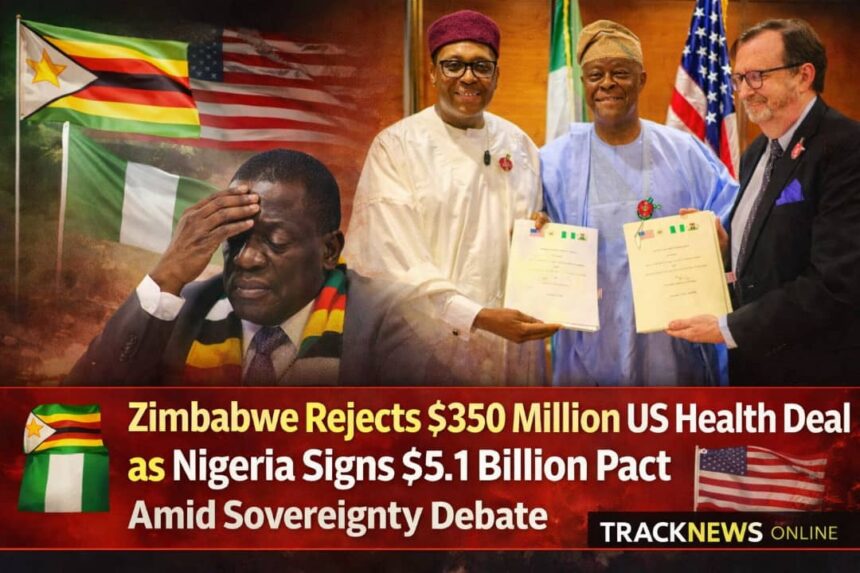
Zimbabwe has rejected a proposed $350 million health funding agreement with the United States, citing concerns over national sovereignty and control of sensitive health data.
President Emmerson Mnangagwa reportedly halted negotiations on the deal, describing it as “lopsided.” According to officials familiar with the discussions, the Zimbabwean government raised objections to provisions that would have granted the US direct access to national health data systems.
Authorities in Harare expressed concern that such access could extend beyond public health collaboration and potentially pose intelligence or security risks. The government said protecting national independence and safeguarding sensitive data were key considerations in its decision.
The rejection comes at a time when several African countries are expanding partnerships with international donors to strengthen public health systems. Zimbabwe’s stance signals a cautious approach to foreign-funded agreements that involve oversight mechanisms or data-sharing requirements.
In contrast, Nigeria signed a $5.1 billion five-year health agreement with the United States in December 2025. The pact includes $2.1 billion in US grants and $3 billion in counterpart funding from Nigeria.
The agreement is designed to support programs targeting HIV, tuberculosis and malaria. It also covers maternal and child health services, polio eradication efforts and the expansion of faith-based healthcare initiatives.
Nigerian authorities have described the pact as a major boost to the country’s healthcare system. Officials say the funding will strengthen service delivery, expand access to treatment and improve outcomes in vulnerable communities.
However, the scale and structure of the agreement have triggered debate among policy analysts, opposition parties and civil society groups.
Some experts have raised concerns about potential sovereignty implications tied to the deal. They point to clauses that reportedly allow for conditional funding pauses if agreed spending benchmarks are not met.
There are also concerns about mandated policy alignment with donor frameworks. Analysts note that such provisions could influence domestic health priorities or regulatory decisions over time.
Oversight mechanisms related to health data management have also drawn scrutiny. Critics argue that external monitoring arrangements must be carefully structured to ensure compliance with national laws and data protection standards.
Another issue raised is the risk of long-term dependency on foreign funding. Public health advocates warn that heavy reliance on external grants could create sustainability challenges if funding levels change in the future.
Opposition parties, including the African Democratic Congress, have called for greater transparency regarding the terms of the agreement. They have urged the government to publish full details to allow public and legislative scrutiny.
Some civil society organizations have also questioned whether the inclusion of faith-based healthcare expansion could raise constitutional or equity concerns. They have called for assurances that resource allocation will remain inclusive and non-discriminatory.
Government supporters maintain that international partnerships are essential for addressing persistent health challenges. Nigeria carries one of the highest burdens of HIV and malaria globally, and officials argue that external support remains critical to meeting national and global health targets.
They also note that similar agreements have been signed in the past without compromising Nigeria’s sovereignty. According to this view, structured collaboration with development partners is a standard feature of global health financing.
The differing approaches by Zimbabwe and Nigeria highlight broader tensions between securing foreign investment in public services and maintaining policy autonomy.
While Zimbabwe has opted to suspend negotiations over sovereignty concerns, Nigeria has embraced a large-scale funding partnership that it says will strengthen its healthcare system.
As discussions continue, attention is likely to focus on how both countries balance international cooperation with domestic control, and how transparency and accountability are managed in high-value cross-border agreements.