
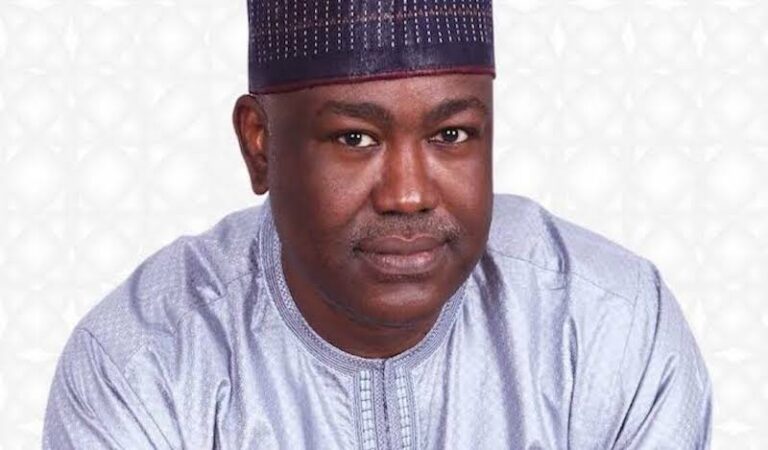
A presidential aspirant of the Peoples Democratic Party (PDP), Gbenga Olawepo-Hashim, has criticized the Nigerian government’s handling of security challenges, stating that the country is currently on the defensive and not adequately prepared to fight terrorism. He made the remarks during an interview in which he assessed the nation’s worsening security situation.
Olawepo-Hashim said Nigeria is facing significant threats from insurgency, banditry, and other forms of violent crime. According to him, the government’s current approach has failed to decisively confront these threats, leaving many communities vulnerable.
He argued that rather than taking proactive steps to eliminate terrorist networks, the government appears to be reacting to attacks after they occur. This defensive posture, he said, has emboldened criminal groups and weakened public confidence in the state’s ability to provide security.
The PDP aspirant expressed concern over the increasing frequency of attacks in different parts of the country.
He noted that insecurity has affected economic activities, displaced communities, and deepened fear among citizens.
Olawepo-Hashim maintained that a more strategic and coordinated response is urgently needed. He stressed that combating terrorism requires strong political will, improved intelligence gathering, and better coordination among security agencies.
He also pointed to what he described as gaps in leadership and planning. According to him, without a clear and comprehensive national security strategy, efforts to defeat insurgent groups may continue to fall short.
The presidential hopeful emphasized the importance of strengthening the nation’s armed forces and other security institutions. He suggested that personnel must be properly equipped, trained, and motivated to effectively carry out their duties.
Olawepo-Hashim further stated that intelligence-driven operations should form the backbone of counterterrorism efforts. He argued that relying solely on military force without adequate intelligence limits the effectiveness of operations.
In his view, the government must also address the root causes of insecurity. He said issues such as poverty, unemployment, and social exclusion create conditions that can fuel unrest and make young people more vulnerable to recruitment by extremist groups.
He called for broader reforms that go beyond military action. According to him, investment in education, job creation, and community development is essential to achieving lasting peace.
The PDP aspirant also highlighted the need for collaboration between federal and state authorities. He said that security challenges often require localized solutions that take into account the unique conditions of affected areas.
He stressed that community engagement is critical in the fight against terrorism. By building trust between citizens and security agencies, he said, authorities can improve intelligence sharing and prevent attacks before they occur.
Olawepo-Hashim expressed concern about the humanitarian impact of insecurity across the country. He noted that many families have been displaced and are living in difficult conditions due to ongoing violence.
He urged the government to prioritize the welfare of affected communities. Providing support for victims, he said, is necessary to restore stability and rebuild trust in government institutions.
The presidential aspirant also questioned whether current policies reflect the urgency of the crisis. He argued that without decisive and sustained action, the security situation could deteriorate further.
Olawepo-Hashim maintained that Nigeria has the capacity to overcome its security challenges. However, he said this would require a shift from what he described as a reactive stance to a proactive and determined strategy.
He concluded by calling on leaders to place national security at the center of governance. According to him, ensuring the safety of citizens is the primary responsibility of any government and must be treated as a top priority.
His remarks add to ongoing debates about how best to address insecurity in Nigeria. As the country continues to grapple with terrorism and other threats, security remains a major issue in the political landscape.