

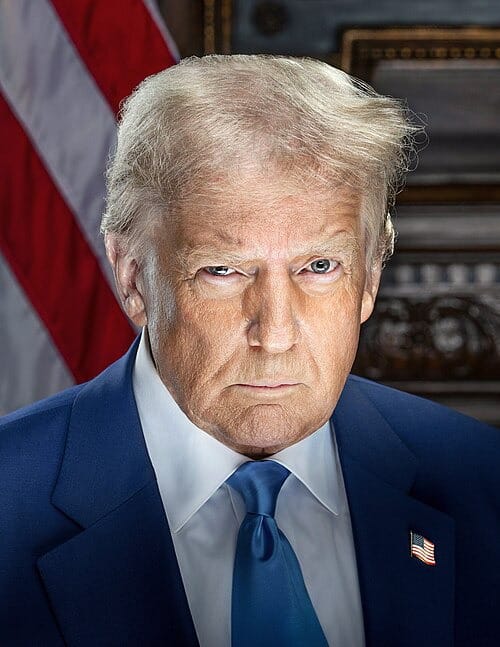
Uncertainty has gripped the Middle East following remarks by former U.S. President Donald Trump suggesting the possibility of regime change in Iran after reports of the killing of Supreme Leader Ayatollah Ali Khamenei. The situation has raised concerns over regional stability, global oil markets, and the safety of civilians, as governments and citizens assess the potential consequences of escalating tensions.
In the immediate aftermath of Khamenei’s reported death, Iran moved swiftly to announce interim leadership arrangements aimed at preserving continuity. Senior political and religious figures declared that the country’s governing structures remained intact, urging calm among the population.
Despite speculation that the leadership vacuum could trigger mass unrest, there have been no widespread movements capable of toppling the Iranian government. While small pockets of protest were reported in some المدن, authorities maintained control, and state institutions continued to function.
Trump, speaking during a public appearance, suggested that the upheaval in Iran could present an opportunity for political transformation. He indicated that a broader conflict with Iran could last up to four weeks if tensions escalate further.
His comments have drawn mixed reactions from international observers. Some analysts view the remarks as rhetorical positioning, while others warn that such statements could inflame an already volatile situation.
Iranian officials have not directly responded to Trump’s regime change suggestion but have emphasized national sovereignty. Government representatives stated that Iran’s political future would be determined internally and not by foreign intervention.
The uncertainty has extended beyond Iran’s borders. Several countries in the Middle East have heightened security measures, particularly around critical infrastructure and diplomatic missions.
Air travel across parts of the region has been significantly disrupted. Multiple international carriers suspended or rerouted flights due to security concerns and airspace restrictions, leaving thousands of passengers stranded.
Airports in key transit hubs reported delays and cancellations as airlines assessed risks. Aviation authorities cited safety precautions amid fears of potential military escalation.
Global oil markets reacted swiftly to the unfolding developments. Crude oil prices rose sharply in early trading, reflecting concerns about supply disruptions from one of the world’s major energy-producing regions.
Energy analysts noted that even the perception of instability in Iran can trigger volatility in oil prices. Traders are closely monitoring any signs of military confrontation or sanctions that could impact production and exports.
Financial markets also experienced fluctuations as investors weighed the possibility of a broader regional conflict. Stock indices in several countries recorded declines amid uncertainty.
Within Iran, state media broadcast messages of unity and resilience. Officials called on citizens to remain calm and avoid actions that could destabilize the country during the leadership transition.
Political experts say Iran’s system of governance includes mechanisms designed to handle sudden changes in leadership. The Assembly of Experts, a clerical body responsible for appointing the Supreme Leader, is expected to play a central role in determining a permanent successor.
Regional powers have expressed concern about the potential for escalation. Diplomatic sources indicated that backchannel communications are ongoing in an effort to prevent further deterioration of the security situation.
The United Nations urged restraint from all parties. A spokesperson emphasized the importance of dialogue and warned against actions that could endanger civilian lives or disrupt international peace.
In Washington, reactions to Trump’s remarks have varied along political lines. Some lawmakers cautioned against endorsing regime change rhetoric, citing past experiences in the region.
Others argued that the United States should closely monitor developments while prioritizing diplomatic solutions. The Biden administration has not formally endorsed any call for regime change and has reiterated its commitment to stability in the Middle East.
Security analysts note that while leadership transitions can create moments of vulnerability, they do not automatically lead to governmental collapse. Iran’s security apparatus remains intact, and there has been no indication of a coordinated nationwide uprising.
Meanwhile, humanitarian organizations are preparing contingency plans in case the situation deteriorates. Aid groups expressed concern about the potential impact on civilians, particularly if supply chains or essential services are disrupted.
The coming weeks are expected to be critical in determining the trajectory of events. Much will depend on internal political dynamics in Iran and the response of international actors.
As oil prices fluctuate and airlines adjust flight routes, the broader global community is watching closely. The prospect of regime change, raised publicly by Trump, has added another layer of complexity to an already uncertain landscape.
For now, Iran’s interim leadership appears focused on maintaining order and projecting stability. Whether the situation evolves into prolonged conflict or settles into a controlled transition remains unclear.