

Written by Engr. Ebideke A. Atuwo in Aberdeen, Scotland, United Kingdom.
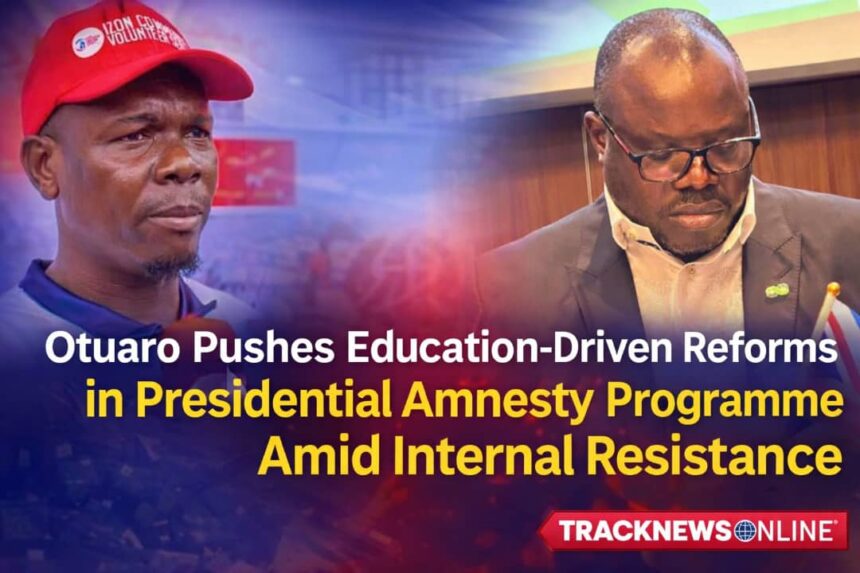
A shift in policy direction is underway within Nigeria’s Presidential Amnesty Programme (PAP), as Administrator High Chief Dennis Otuaro advances reforms centered on education and accountability. The changes, which have drawn mixed reactions from stakeholders, aim to reposition the programme away from patronage and toward long-term human capital development in the Niger Delta.
Otuaro’s approach prioritizes education as the foundation for sustainable empowerment. His administration has emphasized the need to equip beneficiaries with skills relevant to key sectors such as engineering, healthcare, maritime services, and the digital economy.
The renewed focus marks a departure from previous practices often criticized for fostering dependency. Under the current framework, beneficiaries are expected to meet stricter academic and training standards, with increased monitoring of performance and outcomes.
Officials familiar with the reforms say the objective is to ensure that participation in the programme leads to employability rather than temporary financial relief. This has included tighter screening processes for scholarship candidates and a stronger alignment between training and labor market demands.
However, the reforms have faced resistance from within the system. Sources indicate that entrenched interests, including intermediaries and informal agents, have been affected by the new measures.
For years, parts of the programme reportedly operated through layers of middlemen who handled logistics and training arrangements, often with limited oversight. Critics of the old system argued that such practices led to inefficiencies, financial leakages, and incomplete projects.
Otuaro’s administration has moved to dismantle these structures by removing non-performing contractors and introducing stricter procurement and accountability measures. Payments are increasingly tied to verified outputs, while training providers are being evaluated based on the quality of skills delivered rather than enrollment figures.
Supporters of the reforms say these steps are necessary to restore credibility to the programme. They argue that a system focused on measurable outcomes will better serve beneficiaries and reduce opportunities for exploitation.
Opponents, however, have described the policies as overly rigid. Some stakeholders contend that the stricter requirements may limit access or create challenges for participants accustomed to the previous framework.
Despite the criticism, early indicators suggest gradual changes in programme delivery. Reports from beneficiaries point to improvements in training quality and a reduction in cases of abandoned or incomplete courses.
There are also signs of a shift in focus from reliance on stipends to skills acquisition and productivity. In addition, international training partnerships linked to the programme are undergoing review to ensure they meet expected standards.
Analysts note that while the reforms are still in their early stages, they reflect an effort to transition the PAP from a stabilization initiative into a development-oriented institution.
The broader implications of the changes extend beyond administration. Observers say the success of the reforms will depend on acceptance among beneficiaries and stakeholders in the Niger Delta.
Otuaro’s policies emphasize discipline, transparency, and long-term outcomes, challenging long-standing perceptions of the programme as an entitlement system. This shift, while potentially transformative, introduces new expectations for participants.
The Presidential Amnesty Programme was originally established to address unrest in the Niger Delta by providing support and opportunities to former militants and affected youth. Over time, it has evolved into a key intervention platform for education and training in the region.
If sustained, current reforms could redefine its role as a driver of workforce development. However, stakeholders note that achieving this goal will require consistent implementation and cooperation from all parties involved.
As the programme continues to evolve, Otuaro’s leadership is likely to remain a focal point in discussions about governance, accountability, and development in the Niger Delta.