

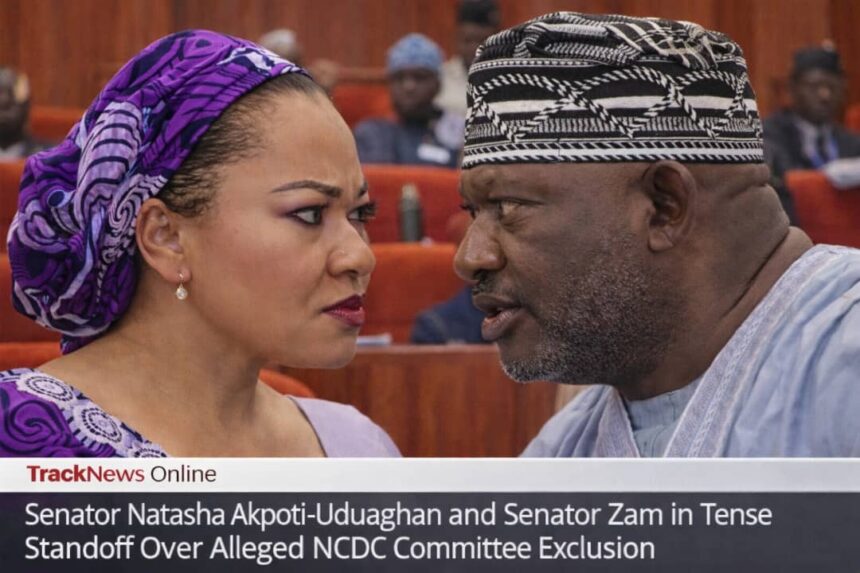
A confrontation erupted between Senator Natasha Akpoti-Uduaghan and Senator Zam following allegations that she was excluded from the Senate committee on the Nigeria Centre for Disease Control (NCDC). The dispute escalated to the point where Akpoti-Uduaghan reportedly blocked access to Zam’s office, triggering a tense standoff within the National Assembly complex.
The disagreement centers on claims that Akpoti-Uduaghan was unfairly removed or sidelined from participation in matters relating to the NCDC committee. According to reports, the senator expressed strong dissatisfaction over what she described as an exclusion that undermined her role and representation.
Sources indicate that tensions rose when Akpoti-Uduaghan confronted Zam over the issue. The situation intensified as she allegedly blocked entry to his office in protest. The incident quickly drew attention from other lawmakers and staff within the assembly.
Witnesses described the atmosphere as heated, with both senators standing firm on their positions. The standoff reportedly required intervention to prevent further escalation. However, no physical altercation was confirmed.
The NCDC committee plays a significant role in legislative oversight of public health matters. Given the importance of the agency, which is responsible for disease control and prevention across Nigeria, committee assignments are often regarded as highly consequential.
Lawmakers typically rely on committee memberships to influence policy discussions and ensure representation of their constituencies. Exclusion from such committees can carry political implications, especially when public health oversight is involved.
While the full details behind the alleged exclusion remain unclear, the confrontation has sparked discussions within political circles about transparency in committee appointments. Senate committees are usually constituted by leadership, and adjustments can sometimes generate controversy among members.
Neither senator immediately released an extensive public statement detailing their positions. However, the confrontation has drawn scrutiny regarding internal dispute resolution mechanisms within the Senate.
Observers note that disagreements over committee placements are not uncommon in legislative bodies. However, incidents that escalate into public confrontations are relatively rare and often attract significant attention.
The development also raises broader questions about internal cohesion within the Senate. As lawmakers navigate legislative responsibilities, maintaining professional decorum is typically emphasized to preserve institutional integrity.
Political analysts suggest that such disputes, if not swiftly addressed, can distract from pressing national issues. The NCDC’s oversight responsibilities are particularly critical amid ongoing public health concerns, making stability within the relevant committee essential.
There has been no official confirmation of disciplinary measures or formal mediation efforts following the standoff. It remains unclear whether Senate leadership has intervened to resolve the matter or review the committee arrangement in question.
The incident has also prompted reactions from members of the public, particularly on social media, where discussions about legislative transparency and fairness have gained traction. Some commentators have called for clearer guidelines in committee selection processes to avoid similar disputes.
Others argue that internal disagreements should be handled discreetly to prevent undermining public confidence in the legislative institution. The Senate, as one of Nigeria’s key democratic institutions, is expected to uphold standards of professionalism and accountability.
As of now, there is no indication that the dispute has affected the operational activities of the NCDC committee. However, attention remains focused on whether the matter will be resolved amicably or lead to further political friction.
The standoff underscores the sensitivity surrounding committee assignments and the influence they carry within legislative frameworks. It also highlights the need for clear communication and conflict resolution channels among lawmakers.
Further developments are expected as Senate leadership and the involved parties address the allegations and the circumstances surrounding the confrontation.