

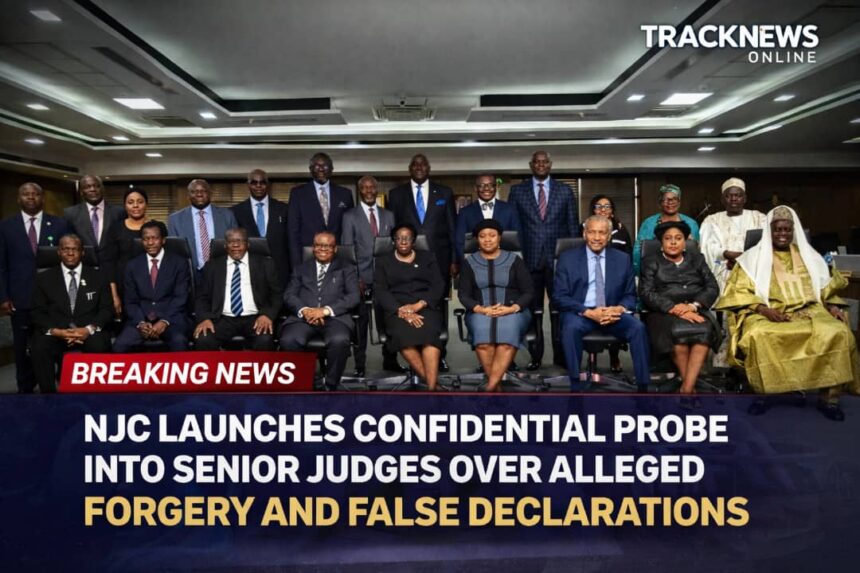
The National Judicial Council has commenced a confidential, high-level investigation into several senior judicial officers, including heads of courts, following multiple petitions alleging serious misconduct.
The allegations under review include forgery, age falsification and false asset declarations. The identities of the judges involved have not been made public.
Sources familiar with the matter said the volume and gravity of the petitions prompted urgent internal deliberations within the council. One petition was reportedly considered particularly weighty, leading to swift action at the highest level.
Chief Justice of Nigeria Kudirat Kekere-Ekun, who chairs the 24-member council, is said to have personally directed that an urgent and discreet inquiry be initiated. The aim, according to sources, is to determine the veracity of the claims, identify any wrongdoing and reinforce accountability within the judiciary.
The probe is being conducted under strict confidentiality. Only a limited circle within the council is reportedly aware of the full details, a measure designed to prevent leaks and protect the integrity of the process.
As of the evening of February 24, 2026, the NJC had not issued any official public statement on the investigation. No judicial officer has been formally named, charged or sanctioned in connection with the latest allegations.
The development comes amid broader reform and disciplinary efforts under Justice Kekere-Ekun, who assumed office as Chief Justice of Nigeria in August 2024. Her tenure has seen a series of actions aimed at addressing ethical concerns within the bench.
In June 2025, the NJC approved the compulsory retirement of nine judges from Imo State over age falsification. The decision followed an investigation that initially examined eighteen judges in the state.
Beyond that case, the council has imposed various sanctions in recent months. These have included warnings, suspensions and recommendations for retirement in matters involving misconduct and abuse of office.
The NJC derives its disciplinary authority from the 1999 Constitution. The constitution empowers the council to investigate judicial officers and recommend appropriate sanctions, including removal from office, subject to constitutional procedures.
Legal observers note that allegations such as forgery and false asset declarations, if proven, carry serious ethical and legal implications. Asset declaration requirements are intended to promote transparency and deter corruption among public officials, including members of the judiciary.
Age falsification has also been a recurring concern in parts of the public service. In the judiciary, accurate records are particularly significant because constitutional retirement ages apply to different categories of judges.
The current investigation is unfolding against a backdrop of persistent public debate about integrity within the justice system. The judiciary is widely regarded as a critical institution for upholding the rule of law and resolving political and civil disputes.
The secrecy surrounding the latest probe reflects both the sensitivity of the allegations and the seniority of the officers reportedly involved. Analysts say confidentiality at this stage may be intended to safeguard due process and prevent reputational damage before findings are reached.
No timelines have been publicly disclosed for the conclusion of the inquiry. It also remains unclear whether the investigation will result in public hearings, formal charges or recommendations for disciplinary action.
Attention is now focused on whether the NJC will issue an official communication in the coming days or weeks. Any confirmed findings or sanctions could have significant implications for the leadership structure of the affected courts.
For now, the council has maintained silence, and the outcome of the confidential probe remains uncertain as the situation continues to develop.