
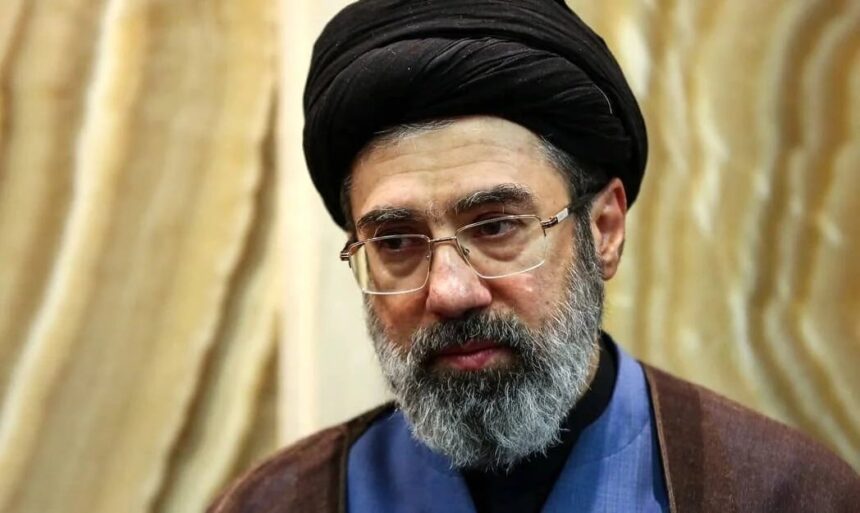
Iran’s Assembly of Experts has elected Mojtaba Khamenei, the son of current Supreme Leader Ayatollah Ali Khamenei, as the country’s next Supreme Leader, according to informed sources who spoke to Iran International. The reported decision marks a significant and unprecedented development in the leadership structure of the Islamic Republic. Sources said the vote took place amid mounting internal and external pressures facing the country.
The decision was reportedly made under substantial pressure from the Islamic Revolutionary Guard Corps (IRGC). The IRGC, a powerful military and political force within Iran, is believed to have played a decisive role in influencing the outcome of the selection process. No official public confirmation has yet been issued by Iranian state authorities regarding the appointment.
If confirmed, Mojtaba Khamenei’s elevation would represent the first time since the 1979 Islamic Revolution that the leadership position has effectively passed from father to son. Ayatollah Ali Khamenei has served as Supreme Leader since 1989, following the death of Ayatollah Ruhollah Khomeini. The role of Supreme Leader is the highest authority in Iran, with control over the armed forces, judiciary, state broadcasting, and key political decisions.
Mojtaba Khamenei has long been viewed as an influential figure operating behind the scenes in Iranian politics. Though he has never held an official senior government position, he is believed to maintain close ties with the IRGC and key conservative factions within the political establishment. His potential succession has been the subject of speculation for years, particularly amid concerns about his father’s health.
The Assembly of Experts, an 88-member clerical body, is constitutionally responsible for appointing and supervising the Supreme Leader. The body is elected by popular vote but candidates are vetted by the Guardian Council, which itself is closely aligned with the Supreme Leader. The Assembly’s deliberations are typically conducted behind closed doors, and details of internal discussions are rarely disclosed.
The reported appointment comes at a time of heightened tensions inside Iran. The country has faced ongoing economic difficulties, widespread public dissatisfaction, and periodic protests in recent years. Internationally, Iran remains under heavy sanctions and continues to face strained relations with Western governments and regional rivals.
In a separate but related development, former Iranian President Mahmoud Ahmadinejad survived an assassination attempt, according to the same sources. The incident reportedly occurred on Tuesday, though specific details about the location and circumstances have not been publicly confirmed. Ahmadinejad was said to be unharmed.
Following the reported attempt on his life, Ahmadinejad was moved to a secure and undisclosed location. Initial reports circulating on social media contained conflicting information, with some claims suggesting he had been killed. However, other sources stated that such reports could not be verified.
Iranian authorities have not publicly commented on the alleged assassination attempt. The lack of official confirmation has contributed to uncertainty surrounding both Ahmadinejad’s condition and the broader political situation. Ahmadinejad, who served as president from 2005 to 2013, remains a controversial figure in Iranian politics and has occasionally expressed positions that diverge from the country’s dominant conservative leadership.
The simultaneous reports of a leadership transition and an assassination attempt have intensified speculation about internal political dynamics within Iran’s ruling establishment. Analysts have long noted tensions among various factions, including hardliners, reformists, and elements within the security apparatus. However, concrete information about internal disputes is often difficult to obtain due to the opaque nature of Iran’s political system.
The reported election of Mojtaba Khamenei is likely to draw strong reactions both domestically and internationally. Critics may question the perception of dynastic succession in a system that officially rejects hereditary rule. Supporters, however, could argue that continuity is essential during a period of instability.
As of now, official Iranian state media have not released a formal announcement confirming the Assembly of Experts’ decision. Further clarification is expected in the coming days as authorities address the reports and the broader political implications become clearer.