
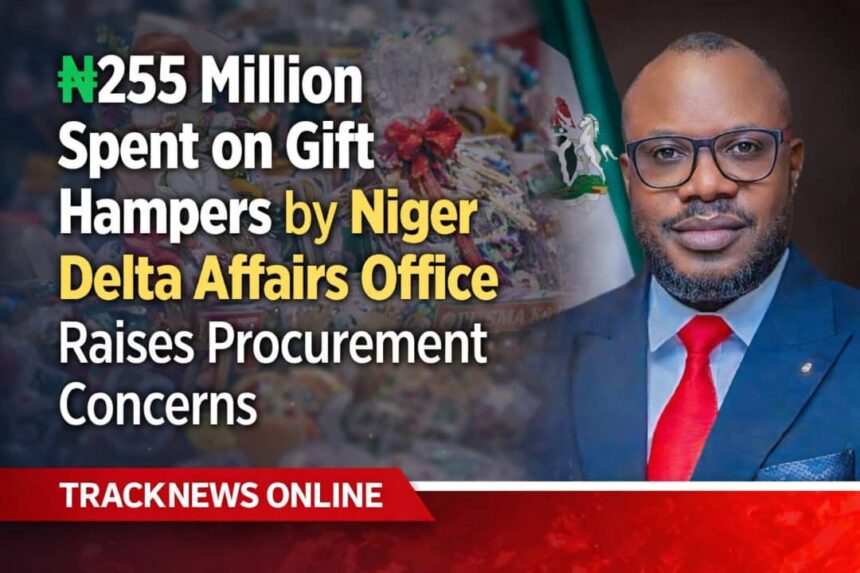
Fresh scrutiny has emerged over public spending in the Office of the Special Adviser to President Bola Tinubu on Niger Delta Affairs following disclosures that more than ₦255 million was paid for gift hampers. The expenditure, revealed through Nigeria’s public payments portal Govspend, has triggered questions about procurement practices and fiscal priorities.
Records indicate that the Office, headed by Dennis Brutus Otuaro, disbursed ₦255.566 million for the supply of 165 gift hampers. The payment was made on December 31, 2025, to a company identified as Ruku Limited.
The hampers, described as gift baskets containing assorted items, represent a significant expenditure at a time when concerns about economic hardship and resource allocation in the Niger Delta region remain prominent.
Further examination of corporate records shows that Ruku Limited was incorporated with the Corporate Affairs Commission in May 2025. This means the company had existed for only about seven months before receiving the multi-million-naira contract.
The timing has raised questions about how the firm qualified for the contract under Nigeria’s procurement regulations. Observers have pointed to provisions of the Public Procurement Act 2007, which outline requirements for companies seeking government contracts.
Under the law, firms are generally expected to have filed annual returns and demonstrate compliance with tax obligations. Contractors are also typically required to provide tax clearance certificates and evidence of operational capacity before being awarded public contracts.
Given the relatively recent registration of Ruku Limited, it remains unclear whether these requirements were fully satisfied prior to the award and payment. The absence of publicly available details on the company’s track record has further fueled concerns.
Analysts and transparency advocates have questioned whether due process was followed in awarding the contract. The situation has intensified calls for greater oversight of public expenditures, particularly within agencies tasked with addressing development challenges in sensitive regions like the Niger Delta.
The development comes amid broader concerns about spending patterns within the Niger Delta Affairs office. Previous reports have alleged that more than ₦2 billion in public funds may have been spent under controversial circumstances, though full details of those expenditures remain under scrutiny.
Critics argue that such spending decisions appear inconsistent with the pressing socio-economic challenges facing communities in the Niger Delta. The region has long grappled with issues including poverty, environmental degradation, and agitation linked to resource control.
The reported allocation of over ₦255 million for gift items has therefore drawn criticism from stakeholders who believe funds should be directed toward development projects and social interventions.
Supporters of stricter fiscal accountability have emphasized the need for transparency in government transactions. They argue that open scrutiny of procurement processes is essential to maintaining public trust and ensuring that funds are used effectively.
As questions continue to mount, there has been no official clarification on how Ruku Limited was selected or whether all procurement guidelines were followed in awarding the contract.
The controversy underscores ongoing challenges in public financial management and highlights the importance of compliance with established regulations in government spending.