
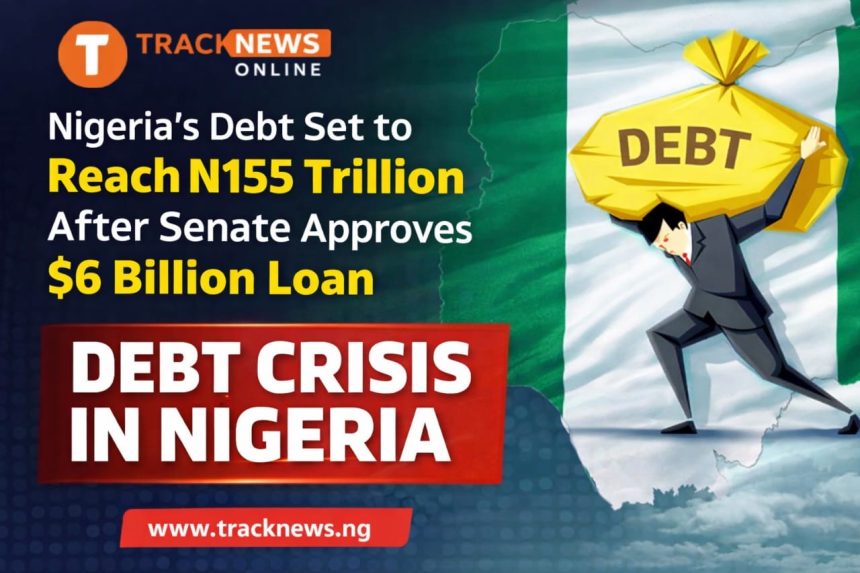
Nigeria’s total public debt is projected to rise to about N155 trillion following the Senate’s approval of a new $6 billion external borrowing request by the Federal Government. The approval, granted on Tuesday, marks a significant addition to the country’s existing debt profile amid ongoing fiscal pressures.
The loan request is part of the government’s broader borrowing plan aimed at financing budget deficits, supporting infrastructure projects, and stabilizing the economy. Lawmakers endorsed the proposal after reviewing its intended use and alignment with national development priorities.
Officials say the funds will be channeled into critical sectors, including infrastructure, energy, and social development programs. The government has argued that the borrowing is necessary to bridge funding gaps and sustain economic growth in the face of declining revenues and rising expenditures.
However, the approval has raised fresh concerns among economists and financial analysts about Nigeria’s growing debt burden. With total debt expected to hit N155 trillion, questions are being asked about the country’s capacity to service its obligations without compromising essential public services.
Nigeria has increasingly relied on both domestic and external borrowing in recent years to finance budget shortfalls. This trend has been driven by challenges such as fluctuating oil revenues, subsidy costs, and foreign exchange constraints.
Critics have warned that continued borrowing without a corresponding increase in revenue generation could worsen the country’s fiscal vulnerability. Debt servicing already consumes a significant portion of government income, limiting funds available for development projects.
Supporters of the loan, however, maintain that strategic borrowing remains a viable tool for economic expansion if properly managed. They emphasize the importance of ensuring that borrowed funds are efficiently utilized and tied to projects that can generate long-term economic returns.
The Senate’s approval underscores the government’s immediate need for liquidity but also highlights the delicate balance between borrowing for growth and maintaining fiscal sustainability. As the new loan is implemented, attention is expected to focus on transparency, accountability, and the measurable impact of the funded projects.
With Nigeria’s debt profile continuing to expand, the development adds urgency to ongoing discussions about revenue reforms, economic diversification, and prudent financial management.