

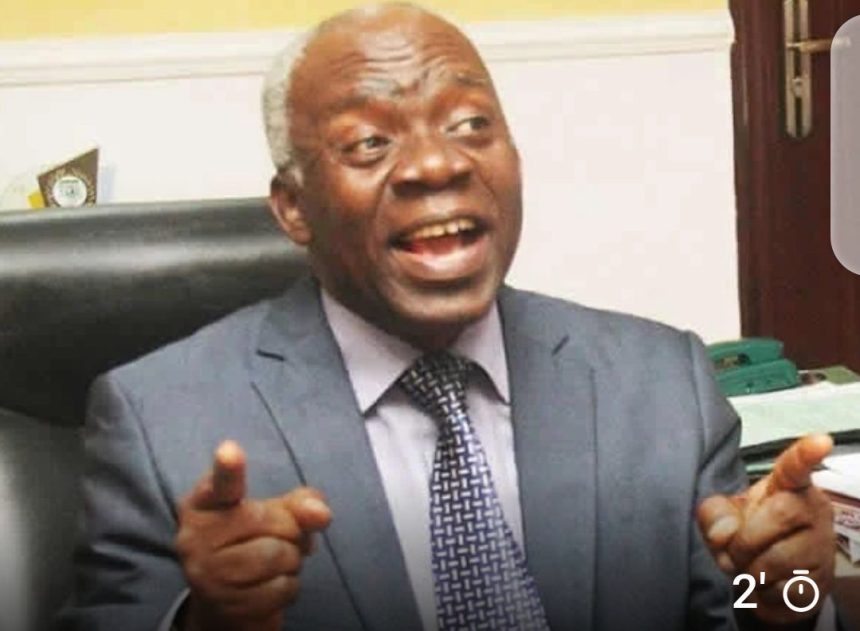
Human rights lawyer Femi Falana has stated that trying military officers accused of plotting a coup in a military court is unconstitutional. He argued that such cases should be handled by civilian courts in line with Nigeria’s legal framework and constitutional provisions.
Falana’s position comes amid ongoing proceedings involving officers accused of involvement in an alleged coup plot. The case has drawn national attention, with debates centering on whether military tribunals have the legal authority to try such serious offenses.
According to Falana, the Nigerian Constitution clearly outlines the jurisdiction of courts, and offenses like coup plotting fall under criminal acts that should be prosecuted in regular courts. He emphasized that while the military has internal disciplinary mechanisms, those should not override constitutional guarantees.
He pointed out that military courts, also known as courts-martial, are primarily established to handle disciplinary matters within the armed forces. These include breaches of military codes and conduct rather than grave criminal offenses that affect the state as a whole.
Falana further argued that subjecting the accused officers to a military trial could undermine their right to a fair hearing. He stressed that civilian courts provide broader legal protections, including transparency and adherence to due process, which are essential in cases of such magnitude.
The senior advocate also warned that bypassing civilian courts might set a dangerous precedent. He noted that it could blur the line between military authority and judicial independence, potentially weakening democratic institutions.
He referenced previous legal interpretations and court rulings that, in his view, support the argument that coup-related charges should be handled by civilian judicial systems. Falana maintained that the supremacy of the constitution must guide all legal proceedings, including those involving military personnel.
The issue has sparked differing opinions among legal experts and observers. Some believe that military courts are better equipped to handle cases involving service members, especially when national security is involved. Others, however, agree with Falana that constitutional provisions should take precedence over military procedures.
The Nigerian military has not publicly detailed its legal reasoning for opting for a military trial in this case. However, such decisions are often justified on the grounds of maintaining discipline and addressing threats within the armed forces swiftly.
Falana urged authorities to reconsider the approach and ensure that the accused officers are tried in a manner consistent with constitutional requirements. He reiterated that upholding the rule of law is crucial, particularly in sensitive cases that could have significant political and security implications.
The controversy highlights ongoing tensions between military authority and civilian legal standards in Nigeria. It also raises broader questions about accountability, fairness, and the proper interpretation of the law in cases involving national security.
As the case continues, it is expected that legal challenges may arise to determine the appropriate jurisdiction. Observers say the outcome could have lasting implications for how similar cases are handled in the future.
Falana concluded by emphasizing that adherence to constitutional principles is essential for maintaining public confidence in the justice system. He called for transparency and strict compliance with the law to ensure that justice is served fairly and without bias.