

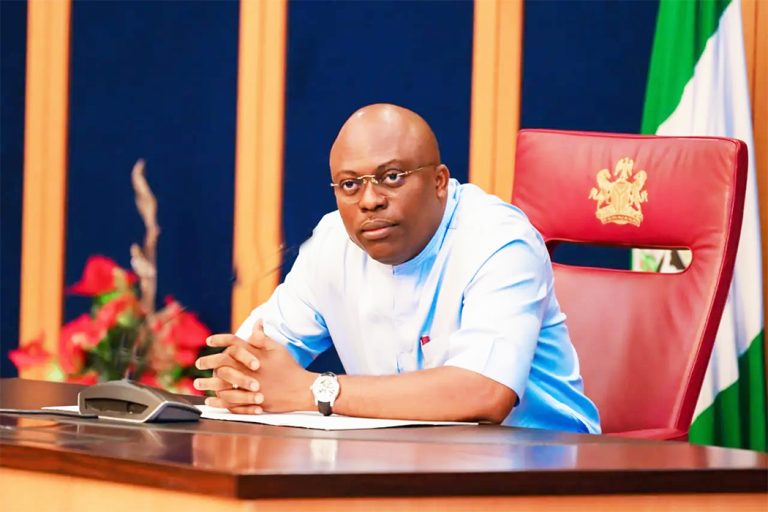
Supporters of Rivers State Governor Siminalayi Fubara have obtained his re-election nomination form ahead of the 2027 governorship race, signaling a fresh escalation in the political tensions between his camp and that of former governor Nyesom Wike. The move underscores a deepening rift within the state’s political structure as alignments begin to solidify.
The development was confirmed by political associates of the governor, who said the decision reflects growing confidence among his loyalists in his leadership and chances for a second term. They described the action as a proactive step to consolidate support early and demonstrate readiness for the next electoral cycle.
Fubara’s supporters framed the move as a response to ongoing political pressures, particularly from factions believed to be aligned with Wike. The former governor, now a prominent political figure at the national level, has continued to wield influence in Rivers State, often shaping the direction of party structures and local politics.
The purchase of the nomination form is being interpreted by observers as a direct challenge to Wike’s authority and influence. Analysts say it signals that Fubara’s camp is prepared to assert independence and build its own political base ahead of 2027.
In a related development, a women’s group in Rivers State has publicly endorsed both Governor Fubara for a second term and President Bola Tinubu for re-election. The group cited governance continuity and perceived achievements as reasons for its support, urging voters to back both leaders in future elections.
Members of the group said their endorsement was based on what they described as progress in governance and the need for stability at both state and federal levels. They also called for greater inclusion of women in political decision-making processes.
The unfolding situation highlights ongoing divisions within the political elite in Rivers State, where competing interests have led to repeated tensions. The relationship between Fubara and Wike has been closely watched, with previous disagreements raising concerns about governance and party unity.
Political analysts note that early positioning for the 2027 elections is becoming increasingly visible across the country. In Rivers State, the rivalry between key actors could significantly influence party dynamics and voter alignments in the coming years.
They caution, however, that such early moves may intensify political competition and deepen existing fractures within party ranks. Managing these divisions will likely be crucial for maintaining stability and ensuring effective governance.
Efforts to reconcile opposing factions have yet to yield lasting results, and it remains unclear whether dialogue will ease tensions. Stakeholders continue to call for unity, warning that prolonged conflict could affect both political outcomes and administrative focus.
As preparations for 2027 gradually take shape, the actions of Fubara’s loyalists point to a broader struggle for control and influence in Rivers State politics. The coming months are expected to reveal how both camps navigate the evolving situation and whether a balance can be achieved.