

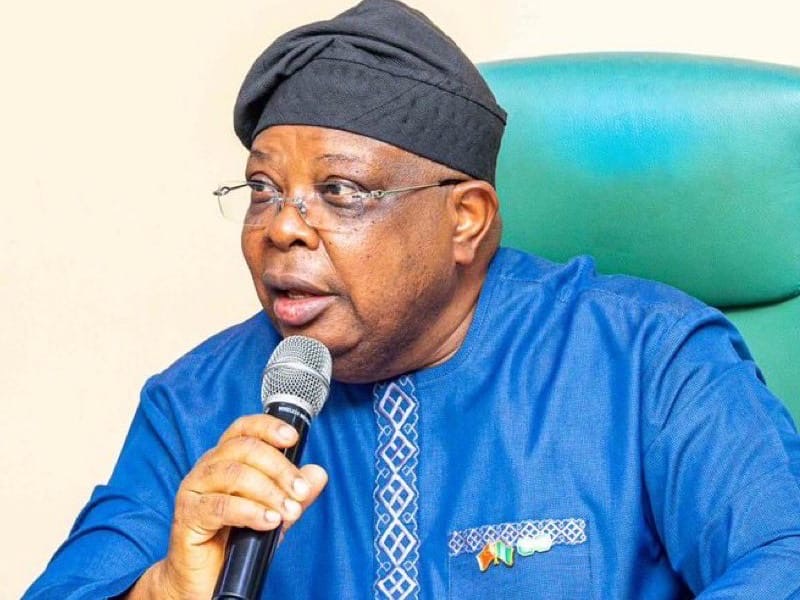
Federal Government considers payment guarantees to tackle N3.3 trillion debt as officials push for improved electricity supply and market efficiency.
Nigeria’s power sector recorded estimated losses of ₦150 billion in the second quarter of 2026, prompting the Federal Government to consider payment assurance mechanisms to prevent further accumulation of debts in the electricity market.
The sector’s outstanding legacy debt is estimated at ₦3.3 trillion, with the government saying it has already paid ₦1.23 trillion as part of efforts to address the financial crisis.
These developments were disclosed on Wednesday in Lagos during the Leadership Summit of the Nigeria Energy Exhibition and Conference 2026 by the Special Adviser to the President on Power, Dr Rilwan Babalola, and the Chairman of the National Tax Policy Implementation Committee, Mr Joseph Tegbe.
Nigeria Generates Below Installed Capacity
Babalola said Nigeria has more than 13,000 megawatts of installed electricity generation capacity but typically generates between 4,000 and 5,000 megawatts daily.
He attributed the gap between available capacity and electricity reaching consumers to poor performance across the power value chain, including technical losses, inadequate billing and weak revenue collection.
According to him, aggregate technical, commercial and collection losses ranged between 30 and 40 per cent, depending on the distribution company, exceeding regulatory targets.
He added that approximately 21 per cent of electricity supplied through transformers was not billed, while about 20 per cent of billed electricity was not paid for.
Babalola said losses above regulatory targets cost the electricity market approximately ₦150 billion every quarter, limiting the funds available to generation companies and gas suppliers.
He stressed that improving performance, accountability, metering and revenue collection must precede further expansion of the sector.
FG Plans Debt Settlement and Payment Guarantees
Tegbe said the Federal Government was exploring structured settlements, payment assurance mechanisms and legally permissible net-off arrangements to address eligible outstanding obligations.
He disclosed that ₦1.23 trillion had been paid against the estimated ₦3.3 trillion legacy debt.
The government is also implementing a power sector recovery plan designed to improve market operations, reduce financial leakages and strengthen the relationship between electricity generation, transmission and distribution.
Tegbe warned that relevant institutions, including the Transmission Company of Nigeria (TCN), the Nigerian Independent System Operator (NISO) and the Nigerian Bulk Electricity Trading Plc (NBET), must improve their performance.
He also encouraged generation and distribution companies to embrace bilateral electricity contracts to ensure that available power reaches customers who need it.
Mambila Hydropower Project Gets Presidential Attention
Tegbe disclosed that President Bola Tinubu had directed the government to resolve longstanding issues surrounding the Mambila hydropower project.
He also said 21 dams identified along the Sokoto-Badagry Expressway would be assessed for possible hydropower development, while small hydro projects could support agricultural production corridors.
The government has commenced technical audits of power infrastructure to identify weaknesses and ensure that investments are directed towards areas with the greatest potential impact.
Priority electricity corridors include Lagos-Ogun, Benin-Edo-Port Harcourt and Abuja-Kaduna-Kano, with Lagos-Ogun and Abuja identified as initial areas for demonstrating the proposed approach.
Tegbe said the strategy would focus on connecting available generation capacity to areas with strong electricity demand, reducing waste and improving the use of existing infrastructure.
Nigeria Targets 270GW Electricity Generation by 2060
Despite current generation levels of between 4,000 and 5,000 megawatts, Tegbe said Nigeria was targeting 270 gigawatts of electricity generation capacity by 2060.
He explained that the long-term ambition was driven by anticipated demand from industrial expansion, agriculture, manufacturing and emerging technologies, including artificial intelligence and data centres.
Tegbe also outlined a three-phase roadmap: stabilisation from June 2026 to February 2027, scaling from March 2027 to June 2028, and transformation from 2028 onwards.
He emphasised that reliable electricity was essential to economic growth, noting that manufacturers and agricultural processors needed dependable power to improve productivity, preserve goods and meet delivery commitments.
The Federal Government’s immediate challenge, however, remains closing the gap between installed capacity and actual generation, reducing losses, addressing outstanding debts and ensuring that available electricity is delivered efficiently to homes and businesses.