

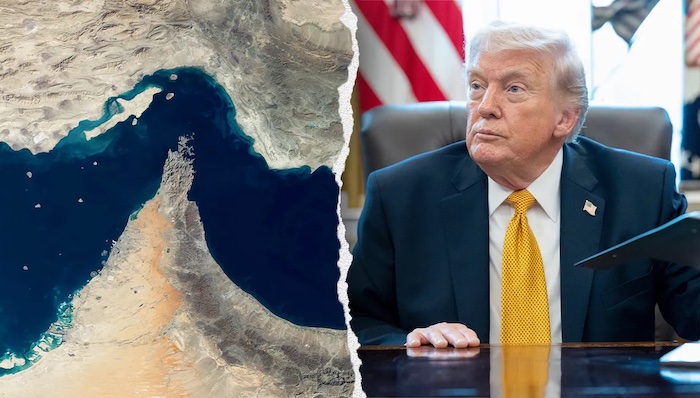
The United States has announced plans to impose a naval blockade on key Iranian ports starting Monday, following the breakdown of diplomatic talks, a move that has already triggered a sharp rise in global oil prices and heightened concerns about a broader regional conflict.
According to officials, the decision came after negotiations between Washington and Tehran failed to produce an agreement on longstanding disputes, including issues related to nuclear development and regional security. The collapse of talks marks a significant escalation in tensions between the two countries.
US authorities said the blockade is intended to restrict Iran’s ability to export oil and receive critical goods through its main ports. The measure is expected to involve increased naval presence in strategic waterways, particularly around the Persian Gulf, one of the world’s most important routes for energy shipments.
In response to the announcement, global oil markets reacted immediately. Prices surged amid fears that any disruption in Gulf shipping lanes could constrain supply and affect international energy markets. Analysts warned that even the perception of instability in the region can lead to volatility, given the concentration of major oil producers in the area.
Iran has not formally accepted the move and is expected to strongly oppose any attempt to block its ports. Officials in Tehran have previously warned that interference with its maritime trade would be considered a serious provocation, raising the risk of retaliatory actions.
Security experts say the situation could escalate quickly if naval forces from either side come into direct confrontation. The Persian Gulf and nearby Strait of Hormuz are critical chokepoints for global oil transport, and any disruption could have far-reaching economic consequences.
The development has also raised alarm among international observers, who fear that the standoff could draw in other regional powers. Countries in the Middle East have long been sensitive to shifts in US-Iran relations, and a military escalation could further destabilize an already tense region.
Diplomatic efforts are reportedly continuing behind the scenes, with some allies urging restraint and calling for a return to negotiations. However, the immediate focus remains on the implementation of the blockade and its potential impact on both regional security and the global economy.
Market analysts say the spike in oil prices reflects not only supply concerns but also broader uncertainty about how the situation will evolve. Investors are closely watching developments, particularly any signs of escalation or disruption to shipping routes.
While the US maintains that the measure is necessary to increase pressure on Iran, critics argue that such actions risk undermining diplomatic channels and could lead to unintended consequences. The coming days are expected to be critical in determining whether tensions can be contained or will spiral into a wider conflict.