
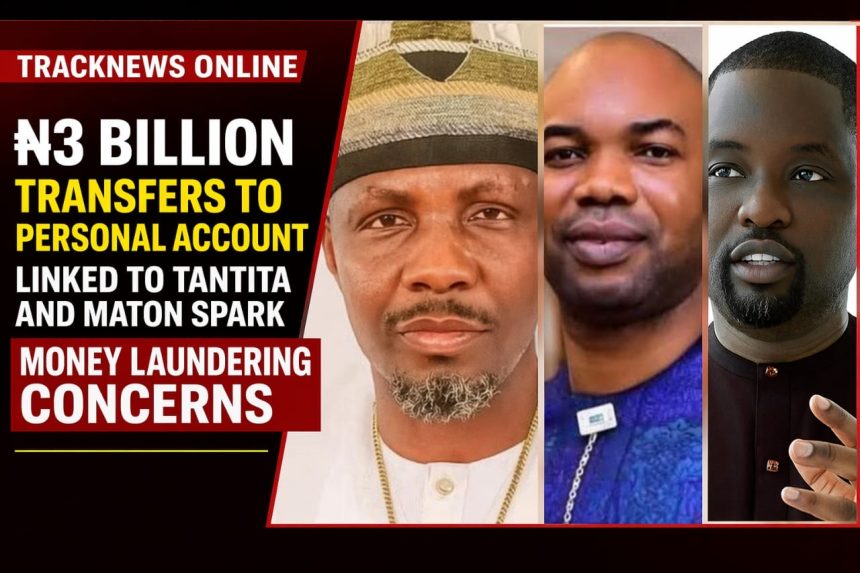
More than ₦3 billion transferred by Tantita Security Services Nigeria Limited and Maton Engineering, companies linked to Government Ekpemupolo, popularly known as Tompolo, and businessman Mathew Tonlagha, has raised fresh concerns over possible money laundering and financial misconduct. The funds were reportedly paid into a personal bank account belonging to Okunbo Hosa Osahon, prompting calls for regulatory scrutiny and investigation.
According to financial records, the transaction occurred on May 6, 2024. The sum was deposited into Osahon’s Stanbic IBTC Bank account, with account number 0022616806. The payment was described with the narration “Business Operations Expense,” a label that has drawn attention due to its use in what appears to be a personal account rather than a corporate one.
Financial analysts and compliance observers have flagged the transaction as unusual. Under standard banking and anti-money laundering (AML) regulations in Nigeria, large-scale business payments are typically expected to pass through registered corporate accounts. The use of a personal account for such high-value transfers raises compliance questions, particularly when the stated purpose is business-related.
The concerns are further heightened by the scale of the transaction. Payments exceeding ₦3 billion fall within thresholds that usually trigger mandatory reporting and enhanced due diligence by financial institutions. Experts note that such transactions are expected to be closely monitored under Nigeria’s AML framework, as well as foreign exchange and banking regulations.
In addition, the account receiving the funds is reportedly linked to other high-volume financial activities. Documents indicate that Osahon’s account may serve as a signatory account to another account with significant turnover. This layered financial activity has been identified as a potential red flag, as it may indicate complex fund movement patterns often associated with financial opacity.
Another issue raised in the documents is the absence of any visible tax records tied to the funds. Available data reportedly shows no corresponding tax payments linked to the ₦3 billion received. This has added to concerns about possible tax evasion, as large inflows categorized as business expenses would typically attract scrutiny from tax authorities.
Regulatory frameworks in Nigeria require transparency in financial transactions, especially those involving corporate entities and large sums. The Central Bank of Nigeria (CBN) and other oversight agencies mandate that banks ensure proper documentation and justification for such transfers. Failure to comply with these requirements can result in investigations and potential sanctions.
The involvement of companies associated with prominent figures has further amplified public interest in the case. Tantita Security Services, in particular, has been linked to major government contracts, including pipeline surveillance operations in the Niger Delta. This connection has intensified calls for accountability and transparency in financial dealings involving the company.
Observers argue that the use of personal accounts for business-related transactions undermines financial accountability systems. It also complicates efforts by regulators to track fund flows and ensure compliance with anti-corruption laws.
Calls have been made for agencies such as the Economic and Financial Crimes Commission (EFCC), the Independent Corrupt Practices Commission (ICPC), and the Federal Inland Revenue Service (FIRS) to examine the transactions. Stakeholders emphasize the need for a thorough investigation to determine whether any laws were violated.
As scrutiny grows, the case highlights broader concerns about financial governance and regulatory enforcement in Nigeria. Analysts say it underscores the importance of strict adherence to banking rules, particularly in high-value transactions involving politically exposed persons or entities linked to public funds.
No official response has yet been issued by the parties named in the documents. Regulators have also not publicly confirmed whether a formal investigation has been launched.
The situation remains under observation as stakeholders await further developments and potential action from relevant authorities.