

For more than two decades, Nigeria’s public university system has been marked by uncertainty, frequent disruptions, and prolonged academic instability. Lecture halls were often deserted midway through semesters, academic calendars stretched endlessly, and millions of students remained caught between interrupted studies and dashed expectations.
That long-running narrative began to shift on Wednesday, January 14, 2026, in Abuja, when the Federal Government and the Academic Staff Union of Universities, ASUU, formally unveiled the 2025 Federal Government–ASUU Agreement. The pact is being described by stakeholders as one of the most significant milestones in the history of Nigeria’s tertiary education sector.
The event was more than a routine signing ceremony. It symbolised an attempt to close a bitter chapter defined by mistrust, failed negotiations, and recurring strikes, while cautiously opening a new phase anchored on dialogue, reform, and stability.
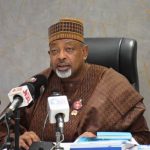
Speaking at the unveiling, the Minister of Education, Dr Tunji Alausa, described the agreement as a decisive turning point for the country’s universities. He said the pact represented renewed trust and restored confidence between the government and academic staff.
According to Alausa, years of engagement between ASUU and successive administrations were characterised by suspicion, partial implementation of agreements, and eventual breakdowns. These failures, he noted, repeatedly plunged universities into industrial actions that disrupted academic activities nationwide.
He credited President Bola Tinubu with personally driving the resolution of the long-standing dispute. The minister said the president’s sustained attention and political will marked a departure from past approaches to the ASUU crisis.
Alausa explained that the negotiations were guided by a clear philosophy that prioritised dialogue over confrontation, reform over delay, and resolution over empty promises. He stressed that the agreement was designed to address structural problems rather than offer temporary relief.
Central to the pact is a 40 per cent upward review of academic staff salaries. The increase, approved by the National Salaries, Incomes and Wages Commission, is scheduled to take effect from January 1, 2026. For lecturers grappling with inflation and declining purchasing power, the adjustment is seen as both timely and significant.
Beyond salary increases, the agreement introduces a restructured welfare framework that links remuneration more directly to productivity and global competitiveness. Academic staff salaries will now consist of the Consolidated University Academic Staff Salary, CONUASS, alongside a strengthened Consolidated Academic Tools Allowance, CATA.
The enhanced CATA is designed to support essential academic activities such as research, journal publications, conference attendance, internet access, and book development. The agreement also redefines nine Earned Academic Allowances, clearly tying them to specific duties including postgraduate supervision, fieldwork, clinical responsibilities, examinations, and leadership roles.
Another notable provision is the introduction of a Professorial Cadre Allowance, the first of its kind in Nigeria’s university system. Under the new arrangement, Professors are to earn N1.74 million annually, while Readers will receive N840,000, in recognition of their academic, administrative, and research responsibilities.
ASUU President, Professor Chris Piwuna, acknowledged the significance of the agreement while recalling the long struggle that preceded it. He said the 2009 agreement should have been renegotiated as far back as 2012 but was delayed by what he described as a lack of sincerity on the part of past governments.
Piwuna explained that the current agreement was the outcome of efforts that began in 2017 and passed through several failed renegotiation committees before meaningful progress was achieved under the Yayale Ahmed-led committee inaugurated in October 2024.
He said the pact addresses conditions of service, funding, university autonomy, academic freedom, and broader systemic reforms aimed at reversing decay, curbing brain drain, and repositioning universities for national development.
Despite welcoming the agreement, Piwuna raised concerns about persistent threats to university autonomy. He accused governments of arbitrarily dissolving governing councils and interfering in the appointment of vice-chancellors, warning that such practices undermine meritocracy and fuel institutional conflict.
He also highlighted plans to push a National Research Council Bill at the National Assembly, proposing the allocation of at least one per cent of Nigeria’s GDP to research and development. According to him, sustainable research funding is essential for national growth.
Minister of State for Education, Professor Suwaiba Ahmad, described the agreement as deeply personal, noting that she understood the toll of disrupted semesters and constrained research. She said the pact marked a shift from confrontation to collaboration.
As reactions continue, the agreement has generated cautious optimism among students, parents, and academics. While the document raises hopes for industrial harmony and predictable academic calendars, many observers agree that its true impact will depend on faithful implementation.
If fully honoured, the 2025 FG–ASUU Agreement could mark a decisive break from decades of strikes and stagnation, offering Nigerian universities a chance to rebuild stability, credibility, and global relevance.