
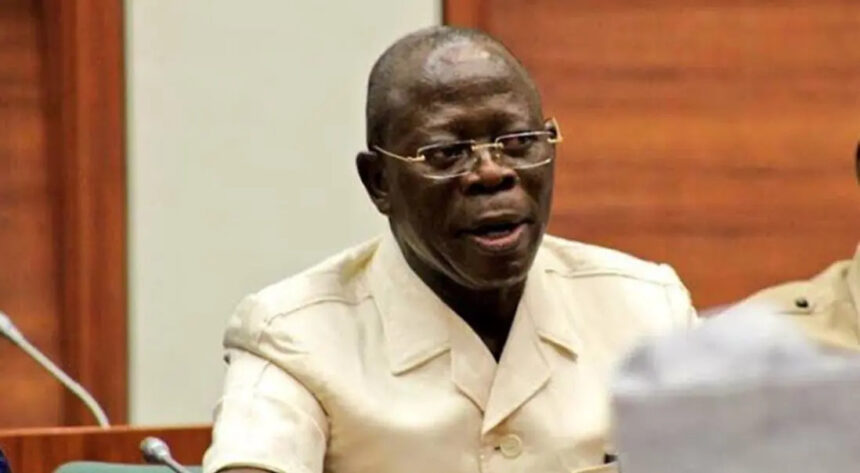
Former Edo State Governor and Senator representing Edo North, Adams Oshiomhole, has said that political sins alone cannot lead politicians to hellfire, drawing reactions from political observers and members of the public.
Oshiomhole made the remark while addressing supporters at a public event, where he spoke about politics, accountability, and personal responsibility. He argued that political actions should not be equated with spiritual condemnation.
According to him, politics is a human endeavor driven by differing opinions and interests, and mistakes made in the political arena should not automatically be interpreted as moral or religious transgressions warranting eternal punishment.
The former national chairman of the All Progressives Congress stated that while politicians may make errors in judgment or policy decisions, such actions are part of governance and public service. He stressed that accountability should be addressed within legal and democratic frameworks.
Oshiomhole’s comments come amid heightened political debates and criticisms among party members and opposition figures. His statement has been interpreted by some as a response to accusations and attacks commonly exchanged in Nigeria’s political landscape.
He emphasized the need for tolerance and understanding in political discourse, noting that disagreements are inevitable in a democracy. He urged politicians and citizens alike to separate political rivalry from personal or religious condemnation.
The senator also highlighted the importance of focusing on service delivery and development rather than engaging in character attacks. He said political leaders should be evaluated based on their performance and commitment to the public good.
While some supporters described his remarks as a call for moderation in political rhetoric, critics argued that public office holders must uphold high ethical standards and be mindful of the moral implications of their actions.
Political analysts note that statements linking politics and religion often generate strong reactions in Nigeria, where faith plays a significant role in public life. They observed that Oshiomhole’s comment is likely to fuel further debate on the intersection of governance, morality, and religion.
Despite differing interpretations, the former governor maintained that democracy thrives when individuals are free to express their views without fear of spiritual or social stigmatization.
As political activities intensify across the country, public figures continue to make statements aimed at shaping narratives and influencing opinion. Oshiomhole’s remarks add to the ongoing discourse about accountability and the ethical responsibilities of those in public office.