

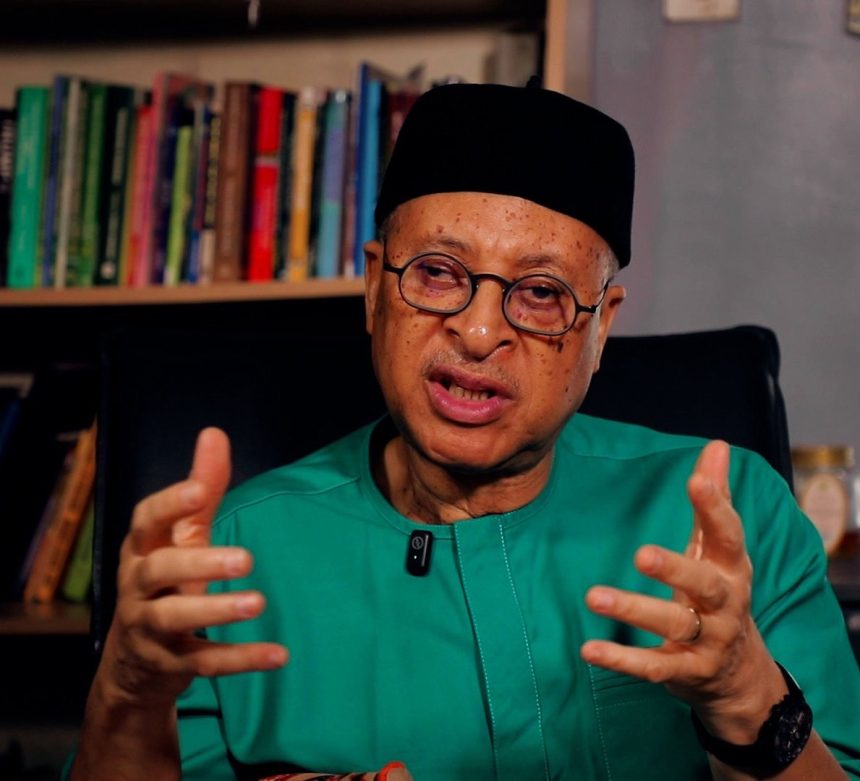
The Presidency has strongly criticized economist Pat Utomi for his remarks describing the Federal Government’s economic reform programme as “ridiculous,” “poorly structured,” and likening it to a “Ponzi scheme.” The response marks a sharp escalation in the exchange between government officials and the prominent political economist over the direction of Nigeria’s economic policies.
Utomi had publicly expressed concerns about the design and implementation of ongoing reforms, arguing that they lack coherence and could have negative consequences for the economy. His comments, which included the controversial comparison to a Ponzi scheme, drew swift reaction from the Presidency, which defended the reforms as necessary and strategically sound.
In its response, the Presidency dismissed Utomi’s characterization as unfounded and misleading. Officials maintained that the reform agenda is aimed at stabilizing the economy, addressing structural imbalances, and laying the groundwork for long-term growth. They argued that such criticisms risk undermining public confidence and misrepresenting the intent of the policies.
Government representatives pointed to key elements of the reform programme, including fiscal adjustments, monetary policy coordination, and efforts to improve revenue generation. They emphasized that the measures are designed to tackle longstanding economic challenges, including inflation, foreign exchange pressures, and budget deficits.
The Presidency further stated that comparisons to a Ponzi scheme are inappropriate, stressing that the reforms are based on established economic principles and are being implemented with transparency. Officials added that the administration remains open to constructive criticism but expects public commentary to be grounded in facts and professional rigor.
Utomi, a well-known advocate for economic and political reforms, has been vocal about governance issues in Nigeria. His critique reflects broader debates among economists and policy analysts regarding the pace, sequencing, and impact of current government policies.
Observers note that the exchange highlights ongoing tensions between policymakers and independent experts over how best to navigate Nigeria’s economic challenges. While some analysts support the government’s reform direction, others have raised concerns about short-term hardships and the effectiveness of certain measures.
The Presidency reiterated its commitment to engaging stakeholders and refining its policies where necessary, while continuing to pursue reforms it believes are essential for economic recovery. It also called for a more balanced and evidence-based discourse on national economic issues.
As discussions continue, the debate underscores the complexity of implementing economic reforms in a challenging environment, where differing perspectives often shape public understanding and policy outcomes.