

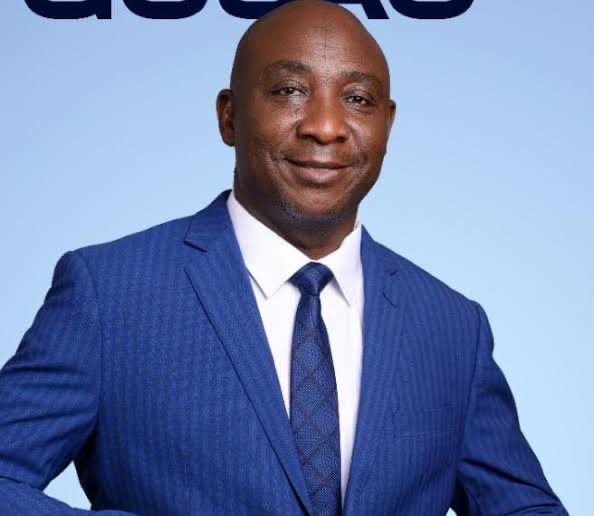
The Nigeria Football Federation (NFF) and former Super Eagles striker Victor Agali are at odds over claims that retired Nigerian international players are owed pensions allegedly provided through FIFA. The disagreement follows Agali’s assertion that funds meant for ex-players have not been disbursed.
Agali, who represented Nigeria between 1999 and 2005 and scored five goals in 11 appearances, made the claim during an interview on the Home Turf podcast. He stated that FIFA sends money annually to football federations, including Nigeria, as a form of pension support for retired internationals.
According to him, many former players are unaware of the arrangement, and those who know about it have not benefited. He said he personally had not received any payments and was aware of several others in the same situation.
“We talk about pension. Do you know there’s money coming from FIFA to Nigeria for the ex-players?” Agali said. “I’ve not gotten anything from them. I can’t speak for others, but I know a reasonable number of people who haven’t gotten anything, but I know the money is coming in.”
He further criticized football administration in Nigeria, alleging a lack of respect for former players. Agali added that during his time in Europe, he was aware of former players receiving similar benefits, suggesting that such arrangements exist elsewhere.
The NFF has, however, strongly rejected the claim. Reacting to the allegation, the federation’s Secretary General, Mohammed Sanusi, described the statement as unfounded and misleading.
“It is funny because I have never heard of it in my life. Whatever FIFA does is known to everybody. It has never happened,” Sanusi said. “These people should stop disgracing themselves by making such wild claims when people can verify such claims. Anybody can get the information from FIFA. This type of thing is not hidden.”
Sanusi maintained that there is no known pension scheme funded directly by FIFA for retired international players through national federations. He emphasized that FIFA’s programs and financial disbursements are transparent and accessible for verification.
Further findings indicate that FIFA does not operate a direct pension scheme for former international footballers. Instead, the global football body runs welfare initiatives such as the FIFA Fund for Football Players (FFP), which provides financial assistance to players facing hardship or those owed salaries by clubs.
In addition, FIFA supports various development and support programs, but these do not include automatic pension payments to former national team players. Any structured retirement benefits for footballers are typically managed at the national level or through players’ unions.
In some countries, pension arrangements exist but are tied to club careers rather than international appearances. For example, in England, former players benefit from the Professional Footballers’ Association (PFA) Pension Scheme. This system is funded through contributions made by players and clubs during their professional careers.
Under that model, players accumulate retirement funds over time, which are managed independently of the national football association. There is no automatic pension granted solely for representing the national team.
The disagreement between Agali and the NFF highlights ongoing concerns about welfare and post-career support for retired footballers in Nigeria. While FIFA provides limited assistance through specific programs, there is no evidence of a universal pension scheme for ex-internationals as claimed.
The issue has sparked wider discussions about the need for structured support systems for former players, particularly in countries where such frameworks are either absent or not clearly defined.