

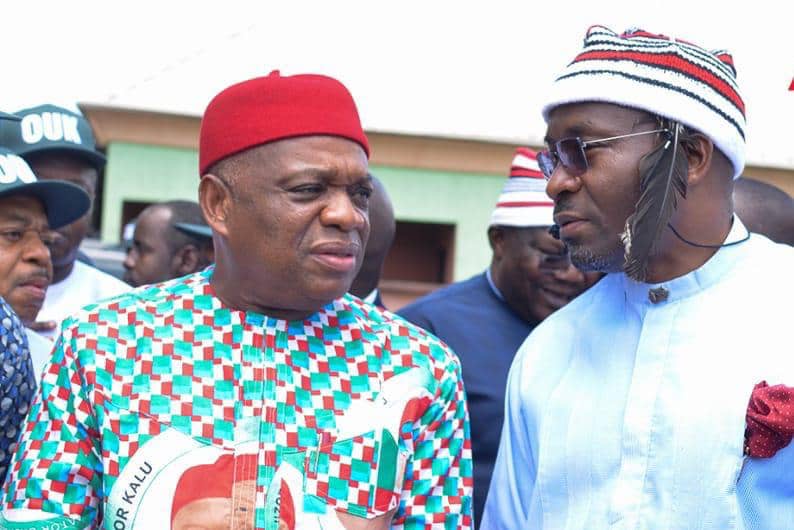
Deputy Speaker of the House of Representatives, Benjamin Kalu, has publicly rejected claims by Senator Orji Uzor Kalu that he played a key role in bringing him into politics.
The rebuttal comes amid an ongoing exchange between the two Abia State politicians over their political history and relationship.
In a detailed statement, Benjamin Kalu described the claim as false, asserting that he was already active in politics before his first interaction with the former Abia State governor. He stated that he had served as the National Chairman of the Peoples Democratic Party (PDP) in the diaspora, covering nine provinces, and had participated in national conventions funded by the party’s National Working Committee.
Kalu further noted that he had received recognition at the national level, including being allocated land in Abuja during the administration of former President Olusegun Obasanjo, all before he had any personal relationship with Orji Uzor Kalu. According to him, these achievements demonstrate that his political involvement predated their acquaintance.
He explained that their first meeting occurred through a formal introduction facilitated by Alhaji Shaibu Oyedokun, who was then the PDP Deputy National Chairman (South). Kalu emphasized that this introduction happened within established political structures, countering the suggestion that he was discovered or mentored informally.
Addressing past political contests, Kalu recalled opposing Orji Uzor Kalu’s nomination during the 2002 primaries for the 2003 National Assembly elections. He said he challenged the legitimacy of the process, arguing that no proper primaries were conducted despite Kalu being declared the winner.
He also referenced a reconciliation effort led by Chief P.C. Onyegbu, now a traditional ruler, which sought to resolve disputes within the party. According to Benjamin Kalu, he agreed to support a party candidate under the condition that he would later be compensated with a local government chairmanship position, though he claims that arrangement was ultimately not honored.
Kalu accused the senator of undermining his political progression, alleging that promises of appointments, including a commissioner role, were made and later withdrawn. He questioned whether such actions were consistent with someone who claims to have supported or mentored another politician.
The deputy speaker also highlighted his own contributions to Orji Uzor Kalu’s political career, stating that he supported the senator’s 2003 re-election bid with financial resources and campaign efforts. He cited fundraising activities and personal contributions as evidence of his involvement.
On the issue of his own emergence as a member of the House of Representatives, Kalu disputed claims that Orji Uzor Kalu facilitated his election. He alleged that the senator had, at different times, supported opposition candidates against him, including during elections in 2011 and 2015, despite publicly presenting himself as an ally.
Kalu further recounted a meeting held before party primaries where he claimed Orji Uzor Kalu withdrew his support for him. He described tensions at the meeting, including opposition from other individuals present, and suggested that the withdrawal of backing contradicted the narrative of mentorship.
He also alleged interference during the primaries process, claiming that individuals were sent to disrupt the exercise and seize materials. Despite this, he said he was able to overcome the challenges and continue his political pursuit.
The statement concluded with Kalu expressing confidence that the full details of past events would eventually become clear. The exchange underscores ongoing political tensions between the two figures, both of whom remain influential in Abia State politics.