
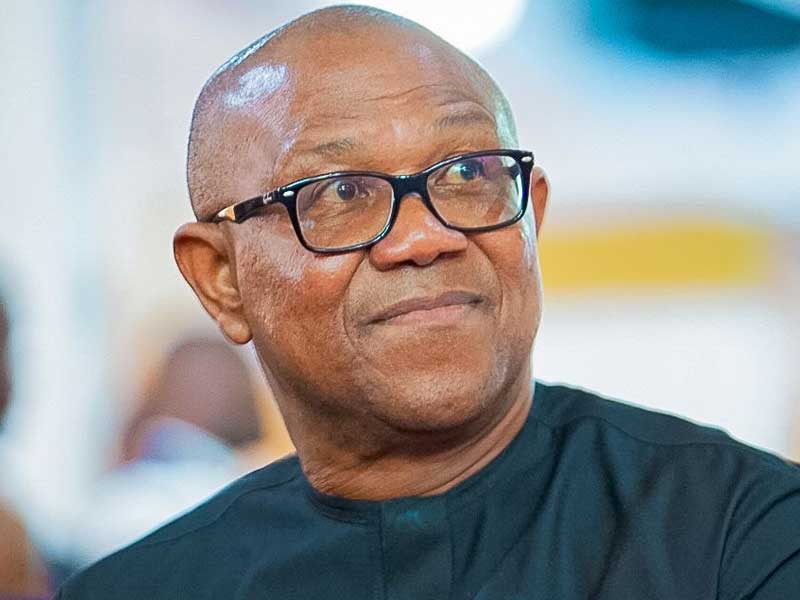
Former Anambra State governor and Labour Party presidential candidate Peter Obi has again come under public scrutiny following renewed debates about his history of political defections, with critics questioning his consistency and long-term political commitments ahead of the 2027 general elections.
The latest criticism emerged in a commentary by Mobolaji Sanusi titled “Peter Obi, The Political Wanderer, Moves Again,” which referenced an old statement made by Obi during his time in the All Progressives Grand Alliance (APGA). In the statement, Obi had declared strong loyalty to the party, saying he would remain in APGA throughout his political career.
“I will not only remain in APGA, but I will die for APGA. The day I quit APGA is the day I will quit politics,” Obi had said at the time, according to the commentary.
The resurfacing of the statement has reignited discussions over Obi’s political journey across several parties over the years. Obi first gained national prominence as governor of Anambra State under the APGA platform, serving from 2006 to 2014. During his time in office, he became associated with fiscal prudence and education reforms, earning support beyond the South-East region.
After leaving APGA, Obi joined the Peoples Democratic Party (PDP) in 2014. His move to the PDP marked a major shift in his political career and positioned him within one of Nigeria’s dominant national parties. He later emerged as the running mate to former Vice President Atiku Abubakar during the 2019 presidential election under the PDP platform.
In 2022, Obi left the PDP shortly before the party’s presidential primary election. He subsequently joined the Labour Party, where he secured the party’s presidential ticket ahead of the 2023 general election.
Obi’s 2023 presidential campaign drew significant national attention, especially among young voters and urban professionals. His supporters, popularly known as the “Obidient Movement,” mobilized strongly on social media and across major cities, helping transform the Labour Party into a more visible national political force.
Despite finishing third in the official results announced by the Independent National Electoral Commission (INEC), Obi challenged the outcome of the election in court, alleging irregularities. The Supreme Court eventually upheld the victory of President Bola Tinubu.
Since the election, Obi has remained active in national political conversations, frequently commenting on governance, economic hardship, insecurity, and public accountability. However, discussions about his political consistency have persisted among both supporters and critics.
Critics argue that Obi’s movement between political parties raises questions about ideological loyalty and long-term political positioning. They point to his earlier public declarations of commitment to APGA as evidence of changing political alignments over time.
Supporters of the former governor, however, maintain that political realignments are common in Nigeria’s evolving democratic environment. They argue that Obi’s decisions have largely reflected strategic efforts to pursue broader national platforms capable of supporting his political ambitions and reform agenda.
Some political analysts also note that party defections are widespread across Nigeria’s political landscape, involving politicians from nearly all major parties. According to observers, ideological differences between parties in Nigeria are often less defined than in some other democracies, making political migration relatively common.
Obi has repeatedly defended his political decisions in previous interviews, insisting that his focus remains on governance, accountability, and national development rather than party loyalty alone. He has also emphasized the need for competent leadership and institutional reforms.
The renewed conversation surrounding Obi’s political history comes at a time when discussions about possible coalitions and opposition alliances ahead of the 2027 elections are already gaining momentum. Although no formal political movement has been announced by Obi regarding another party shift, speculation continues within political circles over the future direction of opposition politics in Nigeria.
As political activities gradually intensify ahead of the next election cycle, analysts believe debates over loyalty, ideology, and political consistency will continue to shape public perceptions of major political figures, including Peter Obi.
For now, Obi remains one of the country’s most prominent opposition voices, with supporters viewing him as a reform-minded leader while critics continue to question the consistency of his political path.