

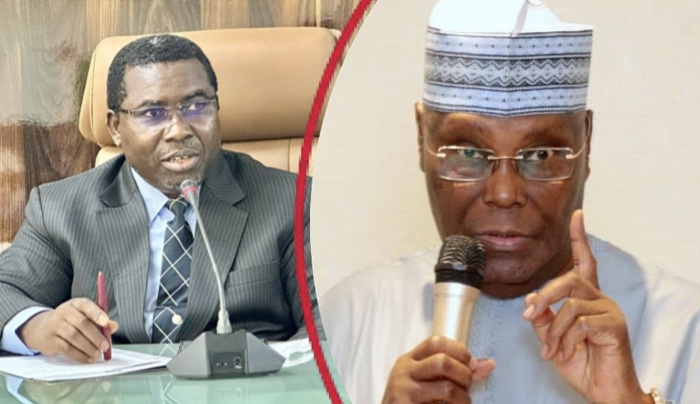
Former Vice President Atiku Abubakar and ex-Sokoto State Governor Aminu Tambuwal have raised concerns over alleged bias by Nigeria’s Independent National Electoral Commission (INEC), as key opposition leaders gather under the African Democratic Congress (ADC) to coordinate political strategy for the 2027 general elections.
The claims were made during a high-level meeting involving prominent opposition figures, where discussions focused on electoral reforms, coalition-building, and strengthening democratic processes ahead of the next election cycle. The gathering signals a growing effort among opposition groups to unify and challenge the ruling establishment more effectively.
Atiku, a leading figure in Nigeria’s opposition politics, expressed dissatisfaction with the conduct of recent elections, arguing that electoral processes have increasingly fallen short of public expectations. He emphasized the need for greater transparency, accountability, and independence within INEC, warning that public trust in democratic institutions could erode further if concerns are not addressed.
Tambuwal echoed similar sentiments, stating that credible elections are essential to sustaining democracy in Nigeria. He pointed to perceived irregularities in past electoral exercises and called for comprehensive reforms to ensure that future elections reflect the true will of the people. According to him, opposition parties must work together to safeguard electoral integrity.
The meeting under the ADC platform is being seen as part of broader coalition efforts among opposition leaders who are exploring alternatives to fragmented political engagement. Participants reportedly discussed forming a united front that could present a stronger challenge in 2027, as well as strategies for mobilizing grassroots support across the country.
Political analysts suggest that the ADC is emerging as a potential rallying point for opposition elements seeking a neutral platform for collaboration. While Nigeria’s political landscape has traditionally been dominated by a few major parties, smaller platforms like the ADC are increasingly being considered as vehicles for broader alliances.
INEC has not officially responded to the latest allegations, but the commission has consistently maintained its commitment to neutrality and adherence to the rule of law.
In previous statements, INEC has defended its processes, citing improvements in technology and logistics aimed at enhancing the credibility of elections.
Despite these assurances, skepticism remains among segments of the political class and the electorate. Concerns over issues such as vote transmission, election security, and administrative efficiency have continued to shape public discourse around electoral integrity in Nigeria.
The opposition leaders’ meeting also highlighted the importance of voter engagement and education as part of preparations for 2027. Participants stressed that beyond institutional reforms, increasing public participation and awareness would be crucial in strengthening the democratic process.
Observers note that early strategizing by opposition figures reflects lessons learned from previous election cycles, where disunity and lack of coordination often weakened their chances. By beginning discussions well ahead of the next general elections, opposition leaders appear intent on avoiding past mistakes.
The coming months are expected to see further consultations and possibly formal announcements regarding coalition arrangements. While it remains unclear how unified the opposition will ultimately become, the current efforts indicate a renewed push to reshape Nigeria’s political dynamics ahead of 2027.
As political activities gradually intensify, attention is likely to remain focused on INEC’s role and the broader question of electoral credibility.
The outcome of these debates could play a significant role in determining the level of public confidence in the next general elections.