

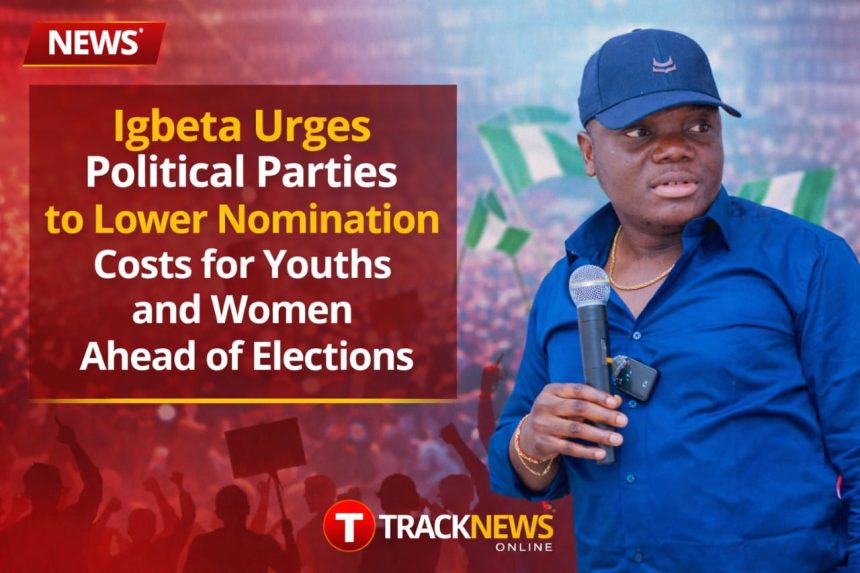
A public affairs commentator, Barrister Ayebakuro Igbeta, has called on political parties in Nigeria to introduce special concessions for youths and women in the sale of nomination forms ahead of upcoming elections. His appeal comes as the Independent National Electoral Commission (INEC) prepares to commence the next phase of political activities, including the sale of forms to aspirants.
Igbeta, who serves as Secretary General of the Bayelsa State Centre for Youths Development, expressed concern over the limited participation of young people and women in elective positions. He noted that these groups are often relegated to supportive roles during elections rather than being given opportunities to emerge as candidates.
Speaking with journalists, Igbeta addressed recent rumors suggesting that the ruling All Progressives Congress (APC) planned to sell its presidential nomination forms for N200 million and State House of Assembly forms for N20 million. He described the claims as unfounded and unrealistic, adding that such pricing would be detrimental to democratic values.
According to him, setting nomination fees at such high levels would exclude capable individuals and encourage corruption among those who eventually secure office. He argued that politicians who spend excessively to secure nominations may prioritize recovering their investments rather than serving the public interest.
Igbeta emphasized that the economic realities in Nigeria make it difficult for many young aspirants and women to afford the high costs traditionally associated with nomination forms. He said that without deliberate efforts to reduce these barriers, political participation would remain restricted to a privileged few.
He urged political parties to adopt discounted rates specifically for youths and female aspirants. Such measures, he said, would promote inclusiveness and encourage broader participation in the political process.
“If the youths are truly the leaders of tomorrow, then the system must support their transition from followers to leaders,” Igbeta stated. He added that positions such as seats in State Houses of Assembly should serve as entry points for young leaders to gain experience and contribute meaningfully to governance.
The legal practitioner also highlighted the need to reduce the role of youths in electoral violence and other irregularities. He argued that many young people are often exploited during elections due to their exclusion from legitimate political opportunities.
Igbeta warned that failing to create room for youth participation could reinforce a system that uses young people as tools for political manipulation rather than empowering them as decision-makers. He said such a system ultimately weakens democracy and undermines national development.
As part of his recommendations, Igbeta proposed that nomination forms be offered at a 75 percent discount for aspirants aged 45 and below, as well as for women. He said this policy would not only increase participation but also enrich the political space with fresh ideas and perspectives.
He added that greater inclusion of youths and women would help reduce political apathy and strengthen democratic institutions. According to him, a more diverse pool of candidates would lead to improved governance outcomes and accountability.
Igbeta concluded by stressing that making nomination forms affordable would instill a sense of responsibility among young leaders. He described governance as a tool for social transformation rather than personal enrichment.
He warned that if high nomination fees persist, it could signal a system where leadership is effectively sold to the highest bidder. In such a scenario, he said, Nigerians should not expect accountability or people-centered governance from elected officials.
The call comes amid ongoing debates about electoral reforms and the need to make Nigeria’s democratic process more inclusive and transparent.