
Former Buhari Aide Challenges Presidential Aspirants to Present Clear Plans for Tackling Nigeria’s Problems
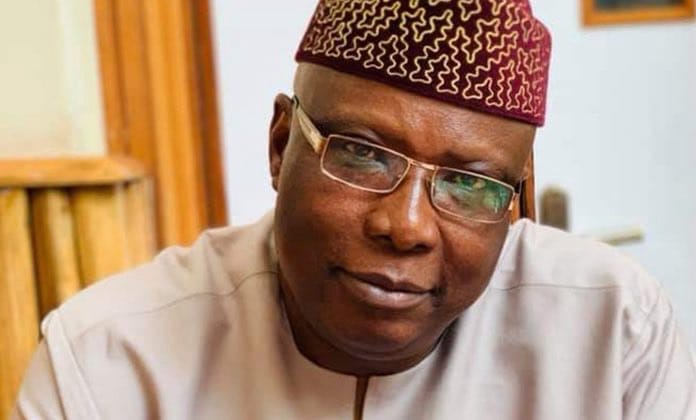
Former Ekiti Central Senator and ex-Special Adviser on Political Matters to President Muhammadu Buhari, Babafemi Ojudu, has said he is yet to decide which presidential candidate to support in the 2027 general election.
Ojudu disclosed this in an essay titled “Big Jeeps, Small Ideas: Nigeria’s Politics of Mediocrity,” published on his Facebook page on Saturday.
He explained that none of the presidential aspirants had sufficiently convinced him with clear and practical plans for addressing Nigeria’s major challenges.
According to him, his voting decision will not be based on personal relationships, ethnic considerations or political party affiliation, but on the quality of ideas and proposed solutions presented by candidates.
Ojudu lamented that Nigerian politics places too much emphasis on political personalities and rivalry, rather than sustained discussions about policies and national development.
He argued that many politicians appear more interested in explaining whom they want to defeat than presenting what they intend to achieve if elected.
Questions Political Parties’ Commitment to Ideology
Reflecting on Nigeria’s political history, Ojudu recalled the Second Republic, when political parties were identified with specific programmes and development philosophies.
He cited the Unity Party of Nigeria (UPN), led by Chief Obafemi Awolowo, and its four cardinal programmes of free education, free health services, full employment and integrated rural development.
He also referenced the National Party of Nigeria (NPN), which promoted the Green Revolution and low-cost housing, as well as Aminu Kano’s political movements, which represented the interests of ordinary Nigerians.
Ojudu questioned whether present-day politicians who claim to uphold the legacies of these leaders were genuinely committed to their ideas and principles.
Challenges Tinubu and Opposition
The former presidential aide acknowledged that leading contenders in the 2023 presidential election, including President Bola Ahmed Tinubu, Atiku Abubakar and Peter Obi, presented manifestos.
However, he questioned how consistently those campaign documents had guided governance after the election.
He said President Tinubu, as the incumbent, had a particular responsibility to explain his administration’s achievements, shortcomings and plans for another term.
Ojudu raised questions about improvements in household incomes, employment opportunities and personal security, asking what Nigerians should expect if the current administration receives another four years.
He also urged opposition politicians to present credible alternatives, stressing that an alliance formed merely to oppose an incumbent does not automatically amount to a workable governing agenda.
Criticises Politics of Material Mobilisation
Ojudu also referred to the reported donation of seven 2026 Toyota Land Cruiser Prado SUVs to APC youth leaders, an initiative confirmed by First Lady Oluremi Tinubu on October 26.
He questioned whether such political mobilisation efforts were translating into meaningful engagement with ordinary Nigerians.
Using the donation as an example, he asked what message political organisers would take to struggling families, traders with shrinking capital and unemployed graduates.
He argued that political organisation should be connected to clear development commitments that directly address citizens’ everyday challenges.
Proposes Five-Point Commitments for Presidential Candidates
As a way forward, Ojudu proposed that major presidential contenders should present five key commitments, explain how they intend to fund them and publish clear timelines for implementation.
He also called for public debates where candidates would be subjected to informed questions about their policies and proposed solutions.
According to him, Nigerians should assess candidates based on the substance of their programmes, while elected leaders should be held accountable for their records in office.
Ojudu concluded that political campaigns should focus more on ideas, measurable commitments and the future of the country than on expensive vehicles and political influence.