
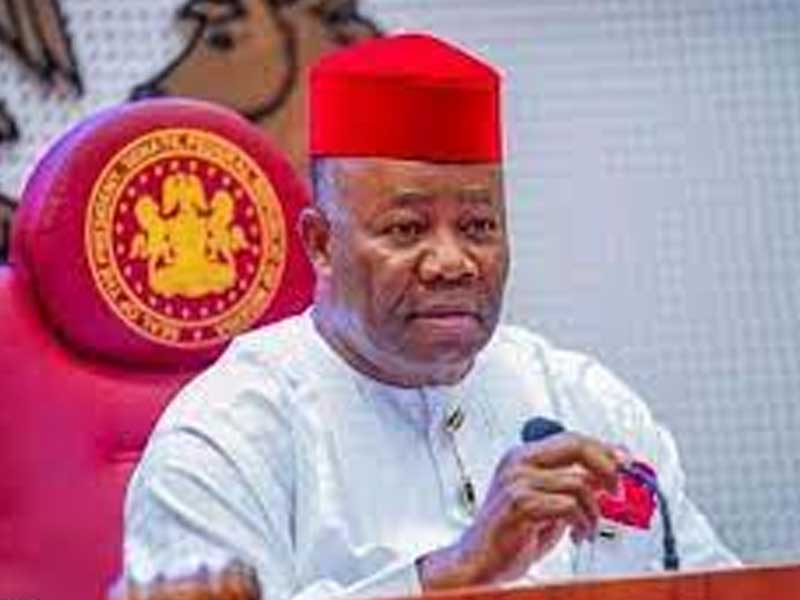
President of the Nigerian Senate, Godswill Akpabio, has urged world leaders and parliaments to prioritize development over conflict, calling for a decisive global shift away from war. He made this appeal while emphasizing the need for stronger international cooperation and a more effective role for the United Nations in addressing global challenges.
Akpabio stressed that continued investment in warfare and conflict has slowed global progress and diverted critical resources away from development goals. He argued that nations must redirect their focus toward improving living standards, strengthening institutions, and fostering economic growth. According to him, sustainable development remains the most viable path to lasting global peace.
Speaking in Abuja, Akpabio highlighted the responsibility of legislative bodies worldwide in shaping policies that encourage peace and stability. He noted that parliaments play a central role in approving budgets, passing laws, and influencing national priorities. As such, he called on lawmakers to champion initiatives that promote development rather than military confrontation.
He also pointed out that the consequences of war extend beyond immediate destruction, affecting future generations through economic instability, displacement, and weakened governance structures. Akpabio warned that without a coordinated global effort to reduce conflict, many regions would continue to struggle with poverty and underdevelopment.
The Senate President further emphasized the importance of strengthening the United Nations to better respond to global crises. He called for reforms that would enable the organization to act more decisively in preventing conflicts and supporting development efforts. According to him, a more empowered UN could help mediate disputes, coordinate humanitarian responses, and provide frameworks for sustainable growth.
Akpabio acknowledged that while the United Nations has made significant contributions to global peacekeeping and development, there is still room for improvement. He suggested that member states should demonstrate greater commitment to the organization’s principles and provide the necessary resources for it to function effectively.
In addition, he underscored the need for stronger collaboration between nations, particularly in addressing shared challenges such as climate change, economic inequality, and security threats. He argued that these issues cannot be solved in isolation and require coordinated international action.
Akpabio also called for increased investment in education, healthcare, and infrastructure as key drivers of development. He noted that by improving access to these essential services, countries can create more stable and prosperous societies. This, he said, would reduce the likelihood of conflict and contribute to long-term peace.
He urged developed nations to support developing countries through fair trade practices, financial assistance, and technology transfer. According to him, bridging the gap between rich and poor nations is essential for achieving global stability and reducing tensions.
The Senate President concluded by reiterating that the world stands at a critical point where decisions made today will shape the future. He encouraged global leaders to embrace dialogue, cooperation, and development-focused policies as the foundation for a more peaceful and prosperous world.
Akpabio’s remarks add to ongoing international discussions about the need to rethink global priorities in the face of rising conflicts and economic challenges. His call reflects a growing sentiment among policymakers that sustainable development must take precedence over war if lasting peace is to be achieved.