

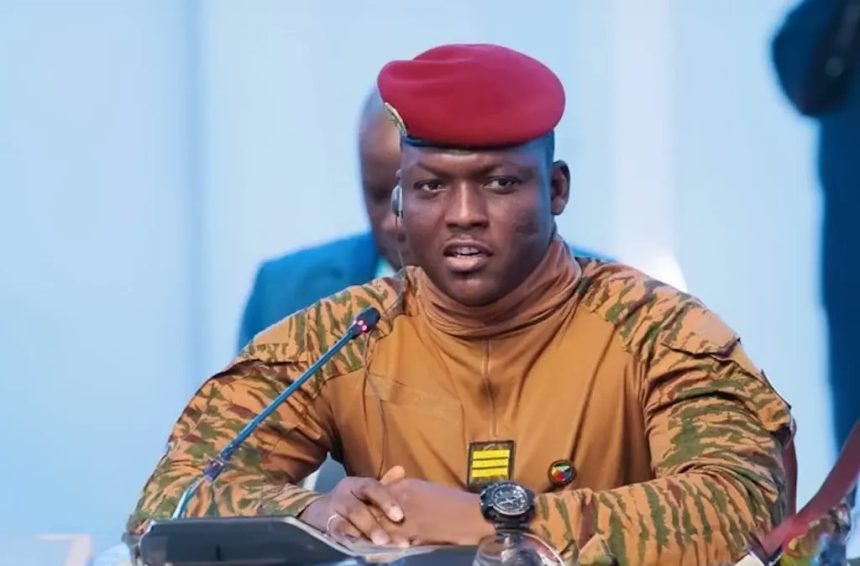
Burkina Faso’s military leader, Captain Ibrahim Traoré, has publicly criticized democratic governance, describing it as unsuitable for his country’s current realities while defending the continuation of military rule.
His remarks come as the West African nation remains under junta leadership following a series of coups that have reshaped its political landscape.
Traoré, who came to power in 2022 after overthrowing a fellow military leader, argued that democratic systems have not delivered stability or security for Burkina Faso.
He maintained that the country’s priority must be addressing ongoing security challenges, particularly the persistent insurgency linked to extremist groups operating across the Sahel region.
He stated that the conditions required for effective democracy, including stability and strong institutions, are currently lacking. According to him, imposing democratic processes under such circumstances could worsen instability rather than resolve it.
The military government has repeatedly postponed a return to civilian rule, citing the need to restore order and reclaim territory from armed groups. Large parts of Burkina Faso remain affected by violence, which has displaced millions and strained state resources.
Traoré defended the junta’s decision to remain in power beyond initial timelines, arguing that a rushed transition could undermine efforts to secure the country. He suggested that the military leadership is better positioned, at least for now, to coordinate national defense and implement urgent reforms.
His comments reflect a broader trend in parts of West Africa, where military governments have challenged traditional democratic models. Similar sentiments have been expressed by leaders in neighboring countries that have also experienced coups in recent years.
Critics, however, warn that rejecting democracy risks entrenching authoritarian rule and weakening accountability.
Political analysts and civil society groups have raised concerns about restrictions on political freedoms, media activity, and opposition voices under military administrations.
International partners have also urged Burkina Faso to outline a clear and credible path back to civilian governance. Regional organizations, including the Economic Community of West African States (ECOWAS), have consistently emphasized the importance of democratic transitions, even as they balance security concerns.
Despite these pressures, Traoré has maintained that Burkina Faso must prioritize sovereignty and self-determination. He has framed his leadership as part of a broader effort to redefine governance in a way that reflects the country’s unique challenges and aspirations.
The junta has sought to rally public support by emphasizing national unity and resistance against external influence.
In recent months, the government has also strengthened ties with alternative international partners while distancing itself from some traditional allies.
Traoré’s stance underscores the tension between security imperatives and democratic expectations in a region grappling with instability.
While his government insists that military rule is a temporary necessity, uncertainty remains over when and how a transition to civilian leadership will take place.
For now, Burkina Faso continues to operate under military authority, with its leadership signaling that the restoration of democracy will depend on improvements in security and national cohesion.


