

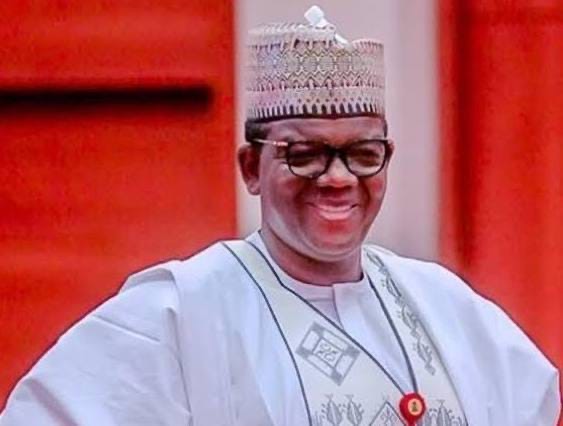
A United States lawmaker has accused Nigeria’s Minister of State for Defence, Bello Matawalle, of attempting to use bribery to suppress scrutiny, according to statements that have drawn attention in both Washington and Abuja. The allegation has not been independently verified, and no formal legal finding has been announced.
The claim reportedly stems from concerns raised during discussions around governance and accountability, with the lawmaker asserting that there were efforts to influence oversight processes. Specific details about when or how the alleged attempt occurred have not been fully disclosed in public statements.
Matawalle has not issued a comprehensive response addressing the accusation as of the time of reporting. However, officials familiar with his position have previously denied wrongdoing in unrelated matters, maintaining that his conduct in public office has been within the law.
The allegation has prompted reactions among political observers, who note that claims involving international actors can carry diplomatic implications. Some analysts caution that without corroborating evidence or formal proceedings, such accusations should be treated carefully to avoid premature conclusions.
In Nigeria, the development has added to ongoing debates about transparency and accountability in public office. Anti-corruption advocates have called for any credible claims to be investigated thoroughly by appropriate authorities, emphasizing the importance of due process.
Legal experts point out that allegations of bribery, particularly those involving cross-border elements, typically require extensive investigation. This may involve cooperation between institutions in different countries, as well as the examination of financial records and communications.
The U.S. lawmaker’s statement is also being viewed in the context of broader efforts to strengthen oversight of international partnerships and security-related engagements. Observers say such scrutiny is common in legislative environments where accountability mechanisms are robust.
Meanwhile, some political figures in Nigeria have urged caution, warning against politicizing unverified claims. They argue that reputations can be significantly affected by allegations alone, even before any formal determination of facts is made.
The situation remains fluid, with attention focused on whether additional information or evidence will emerge in support of the accusation. It is also unclear whether any official inquiry will be launched in either the United States or Nigeria.
For now, the allegation stands as a claim without adjudication, underscoring the importance of investigative processes in establishing the truth. Both supporters and critics of Matawalle are likely to monitor developments closely as more details become available.
The outcome of any potential investigation could have implications not only for the individuals involved but also for broader discussions about governance standards and international accountability.