
AGGE, BAYELSA STATE — An investigation has raised serious questions over the operations of South-East Petroleum Company Limited (SEEPCO), alleging that the company has operated an unauthorised oil terminal in the creeks of Agge, Bayelsa State, while recording no Petroleum Profit Tax payments since commencing production in 2011.
The investigation, published by TrackNews Online, identified MT Vishvamata, a Floating Production, Storage and Offloading (FPSO) vessel, as a key component of SEEPCO’s crude evacuation and storage operations in the area.
The vessel, built in 2002 and bearing IMO number 9175224 and MMSI 657181500, is alleged to receive crude transported through SEEPCO’s barge operations before transferring the crude to other vessels, including MT Ananta, MT Vrinda, MT Ambe and MV Ambika.
According to the investigation, the scale and manner of the operation raise questions over whether Vishvamata effectively functions as an oil terminal despite alleged gaps in federal authorisation.
The report contrasts the operation with the Tulja Bhavani terminal, described in an earlier part of the investigation as a gazetted terminal.
Tax questions over 13 years of production
One of the most significant allegations concerns SEEPCO’s Petroleum Profit Tax obligations.
The investigation cites disclosures attributed to the Nigeria Extractive Industries Transparency Initiative (NEITI) indicating that SEEPCO has not paid Petroleum Profit Tax since it commenced production in 2011.
The company is reported to have maintained that its production costs are sufficiently high to eliminate taxable profits.
However, the investigation argues that Nigerian petroleum tax law places statutory obligations on producing companies once they commence chargeable operations.
It also cites the case of SNEPCO & 3 Ors v. FIRS & Anor, arguing that the courts have affirmed the statutory nature of Petroleum Profit Tax obligations.
The report estimates that SEEPCO may have lifted more than 1.1 billion barrels of crude since 2011, potentially generating more than $10 billion in revenue.
These figures, however, are investigative estimates and would require verification from official production, lifting, sales and tax records.
Questions over crude measurement
The investigation also raises concerns over the absence of what it describes as a certified, independently monitored metering system along the crude evacuation chain.
According to the report, investigators could not identify an independently monitored oil meter covering the movement of crude from the Beneku wellheads, through barge loading points, to the Tulja Bhavani or Vishvamata facilities.
The allegation is significant because accurate metering is fundamental to determining production volumes, royalties, taxes and other government revenues.
The investigation therefore questions how production and revenue figures submitted to regulatory and government agencies can be independently verified if the crude movement cannot be adequately measured.
Local content allegations
The report also raises concerns about SEEPCO’s compliance with Nigeria’s local-content requirements.
It alleges that the company’s workforce has been dominated by expatriate Indian employees, with Nigerians largely occupying junior positions while being underrepresented in management.
Former Nigerian employees who allegedly challenged the company over the issue reportedly lost their jobs and, in some cases, became involved in legal disputes with SEEPCO.
The investigation claims some of those disputes were eventually settled out of court under confidentiality agreements.
Requests reportedly sent to the Nigeria Immigration Service under the Freedom of Information Act seeking information on SEEPCO’s expatriate workforce were said to have remained unanswered at the time of publication.
Environmental concerns
SEEPCO’s barge-based crude evacuation system has also come under scrutiny over alleged environmental impacts in the riverine communities along its routes.
The investigation claims that communities have repeatedly complained about pollution allegedly associated with the movement and handling of crude by barges.
It further alleges that assessments conducted by the National Oil Spill Detection and Response Agency (NOSDRA) in some of the disputed incidents were favourable to the company.
The allegations have raised questions about the effectiveness and independence of environmental monitoring in communities affected by oil operations.
Calls for regulatory scrutiny
The allegations contained in the investigation raise broader questions about regulatory oversight of oil production, crude measurement, taxation, terminal operations, local-content compliance and environmental protection in Nigeria’s creeks.
If verified by the relevant authorities, the issues could warrant examination by agencies including the Nigerian Upstream Regulatory Commission (NUPRC), Nigeria Revenue Service, Nigerian Midstream and Downstream Petroleum Regulatory Authority (NMDPRA), NOSDRA, NEITI and the Nigeria Immigration Service, among others.
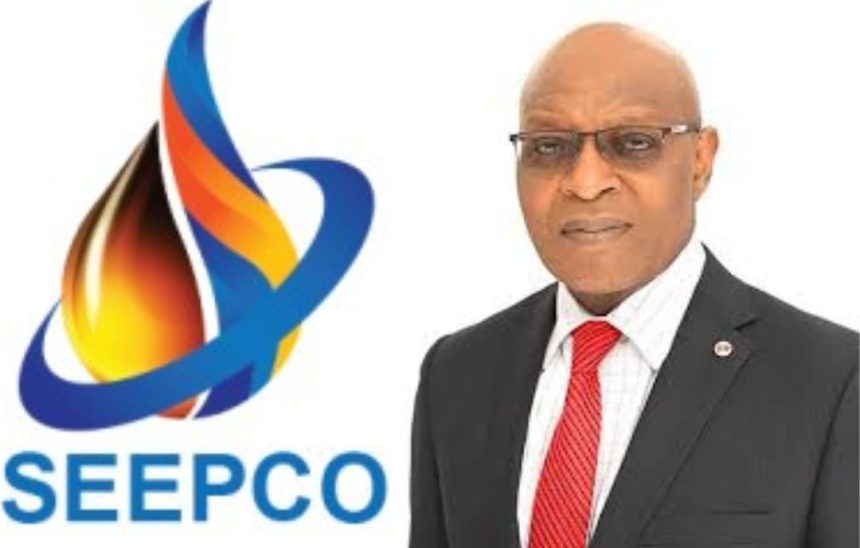
The investigation also puts the spotlight on Anthony Chukwueke, identified as SEEPCO’s chairman, over the company’s alleged operations and compliance record.
However, the allegations remain allegations and should be subjected to independent verification and the responses of SEEPCO, Chukwueke and the relevant government agencies.
TrackNews understands that the central questions requiring answers include whether Vishvamata possesses all necessary federal approvals to function as an oil terminal, how SEEPCO’s crude production and lifting volumes have been independently measured, why the company reportedly has no Petroleum Profit Tax payments recorded since 2011, and whether its operations fully comply with Nigeria’s local-content and environmental regulations.
TrackNews Online will continue to follow the matter and seek responses from SEEPCO, Anthony Chukwueke and the relevant regulatory authorities.