

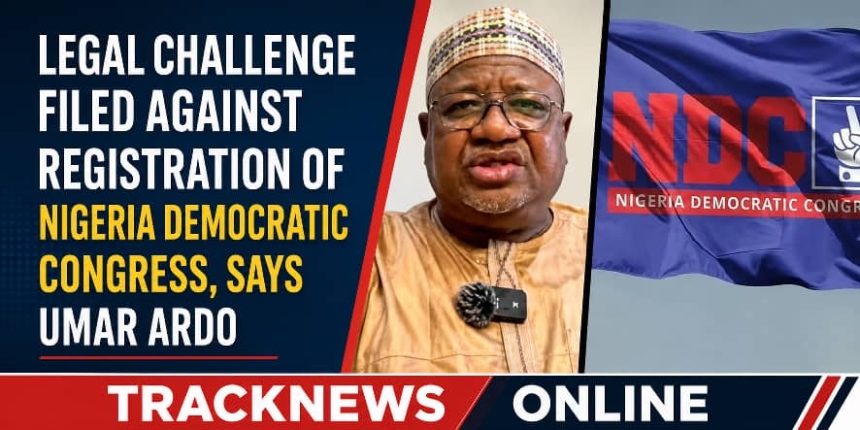
Dr. Umar Ardo has confirmed that a legal case has been filed challenging the registration of the Nigeria Democratic Congress (NDC) by the Independent National Electoral Commission (INEC). He stated that the matter is currently before a court, where it will be reviewed based on claims of procedural irregularities.
Ardo explained that the lawsuit questions the legitimacy of the process through which INEC approved the NDC as a political party. He argued that there were violations of established guidelines, which prompted the decision to seek judicial intervention.
According to him, the case is aimed at ensuring that due process is followed in the registration of political parties in Nigeria. He emphasized that the legal system provides the appropriate avenue for resolving such disputes.
Ardo expressed confidence in the outcome of the case. He said he believes the court will nullify the registration of the NDC after examining the evidence presented.
He maintained that the action is not politically motivated but is rooted in the need to uphold transparency and fairness in the electoral process. He added that adherence to rules is essential for maintaining the integrity of democratic institutions.
The Independent National Electoral Commission is responsible for registering political parties in Nigeria. Its decisions are expected to comply with constitutional provisions and regulatory frameworks governing political activities.
Ardo alleged that the registration of the NDC did not fully meet these requirements. He did not provide extensive details of the specific violations but indicated that they form a central part of the case now under judicial review.
He noted that the judiciary has the final authority to interpret the law in such matters. He also stressed that all parties involved would be bound by the court’s decision once it is delivered.
The development comes amid ongoing discussions about the regulation of political parties in Nigeria. Observers have often raised concerns about compliance with registration criteria and the enforcement of electoral laws.
Legal challenges to party registration are not unprecedented in the country. Such cases typically involve questions about documentation, membership requirements, or adherence to constitutional provisions.
Ardo reiterated that his primary objective is to ensure accountability within the system. He said that political actors and institutions must operate within the boundaries of the law to sustain public trust.
He also pointed out that the court process will allow for a fair hearing of all arguments. This, he said, is essential for reaching a balanced and lawful conclusion.
While the case is ongoing, INEC has not publicly responded to the allegations outlined by Ardo. The commission is expected to defend its actions if required during court proceedings.
The outcome of the case could have implications for the NDC and its political activities. If the court rules in favor of the challenge, the party’s registration may be revoked.
Ardo concluded by reaffirming his belief in the judicial process. He said that the courts remain a critical pillar in safeguarding democratic principles and ensuring that all actions comply with the law.