
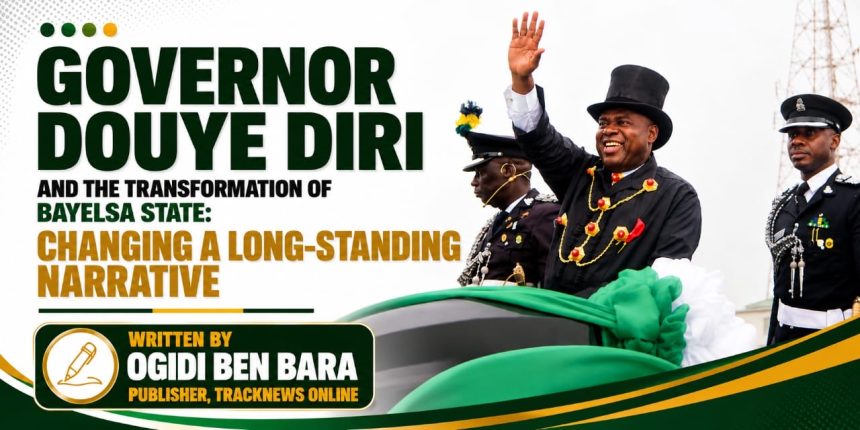
For decades, Bayelsa State carried the burden of a negative national image despite being one of Nigeria’s major oil-producing states. The state, blessed with enormous natural resources and rich cultural heritage, was often associated with underdevelopment, poor infrastructure, difficult terrain, unemployment, inadequate healthcare services, environmental degradation, and weak economic growth.
Many Nigerians questioned why a state so rich in oil resources still faced enormous developmental challenges. In national discussions, Bayelsa was frequently portrayed as a state lacking modern infrastructure and sustainable development. The difficult riverine terrain and years of neglect contributed greatly to these perceptions.
However, under the leadership of Governor Douye Diri, there has been a visible and deliberate effort to reverse these narratives and reposition Bayelsa State for sustainable growth and development. Through strategic investments, infrastructural expansion, human capital development, healthcare reforms, educational support, power initiatives, and economic empowerment programmes, the administration has gradually changed public perception and restored confidence among residents and investors.
Infrastructure Development and Road Connectivity
One of the strongest areas of impact under Governor Douye Diri’s administration is infrastructure development. Road construction and urban renewal projects have become symbols of the government’s commitment to transforming the physical landscape of the state.
For many years, several communities in Bayelsa remained isolated due to poor road networks and difficult access routes. Transportation challenges slowed economic growth, affected commerce, and limited social interaction among communities. Under the present administration, road projects across various local government areas have significantly improved accessibility and mobility.
The construction and rehabilitation of roads, bridges, drainage systems, and public infrastructure have helped connect communities and stimulate economic activities. Areas that were once difficult to access are gradually becoming more connected to the state capital and neighbouring communities. Improved road infrastructure has also positively affected businesses, transportation, and movement of agricultural products within the state.
Urban renewal projects in Yenagoa and other parts of the state have equally contributed to improving the aesthetic and structural outlook of Bayelsa. Public facilities, government institutions, and community infrastructure are witnessing gradual improvements that reflect a growing commitment to development.
Power Supply and the Gas Turbine Project
One of the most important challenges facing many Nigerian states is electricity supply. For years, unstable power supply negatively affected businesses, industries, hospitals, schools, and households in Bayelsa State. Entrepreneurs struggled to sustain businesses because of high dependence on generators and alternative power sources.
The progress recorded in the gas turbine project and power infrastructure development under Governor Douye Diri has therefore become a major point of public discussion and optimism. The administration’s commitment to improving electricity generation and distribution represents a critical step toward industrialisation and economic expansion.
Reliable power supply remains one of the foundations of economic growth. Stable electricity has the potential to attract investors, improve productivity, create jobs, encourage industrial development, and support small and medium-scale enterprises. The ongoing efforts in the power sector are gradually giving residents hope that Bayelsa can become one of the few states with improved and sustainable energy solutions.
The progress made in the gas turbine initiative demonstrates the government’s understanding that modern development cannot thrive without stable power infrastructure. Although challenges remain, many citizens believe the administration deserves recognition for taking practical steps toward addressing a long-standing problem.
Human Capital Development and Youth Empowerment
Beyond physical infrastructure, Governor Douye Diri’s administration has placed significant attention on human capital development. Recognising that development is not only about roads and buildings but also about investing in people, the government has introduced programmes aimed at empowering youths, supporting entrepreneurs, and improving educational opportunities.
Youth empowerment initiatives, vocational training programmes, scholarships, and skill acquisition schemes have helped many young people gain opportunities for self-reliance and employment. In a state where youth unemployment has remained a major concern, these interventions are helping to reduce social frustration and encourage productivity among the younger population.
Education continues to receive attention through support for schools, learning infrastructure, teacher welfare, and student-focused initiatives. The government’s emphasis on education reflects a long-term strategy to prepare future generations for leadership, innovation, and economic participation.
Human capital development also includes support for women, community groups, and vulnerable populations through empowerment programmes designed to improve livelihoods and reduce poverty. These efforts contribute to social stability and community development.
Healthcare Sector Reforms
Healthcare delivery is another critical area where the administration has attempted to make meaningful improvements. For many years, inadequate medical facilities, shortage of equipment, and poor healthcare infrastructure affected the quality of medical services available to residents.
Under Governor Douye Diri, efforts have been made to improve hospitals, healthcare centres, medical equipment, and healthcare accessibility across various parts of the state. Investments in healthcare infrastructure are helping to strengthen service delivery and improve patient care.
The government’s focus on healthcare is especially important in rural and riverine communities where access to medical services has historically been limited. Improved healthcare facilities and interventions help reduce medical emergencies, improve maternal and child healthcare, and strengthen public confidence in the healthcare system.
The administration’s commitment to healthcare development became even more important in the post-pandemic era where governments across the world recognised the need for stronger public health systems.
Economic Growth and Diversification
Like many oil-producing states, Bayelsa has historically depended heavily on oil revenue. However, overdependence on oil creates economic vulnerability, especially during periods of declining global oil prices.
Governor Douye Diri’s administration has shown interest in promoting economic diversification through agriculture, small business support, investment opportunities, and infrastructural expansion. Agriculture remains a key sector with the potential to create employment, ensure food security, and stimulate local economies.
Support for small businesses and local entrepreneurs also contributes to economic growth by encouraging innovation and enterprise development. Improved infrastructure and electricity supply further create an enabling environment for business expansion.
Tourism and cultural development also hold significant potential for Bayelsa State because of its rich cultural heritage, waterways, festivals, and environmental uniqueness. With proper investment and promotion, the state can attract tourism opportunities capable of generating additional revenue and employment.
Security, Peace, and Stability
No meaningful development can occur without peace and security. Governor Douye Diri’s administration has consistently emphasised peace, unity, and political stability within the state.
Bayelsa has experienced political tensions and security challenges in the past, but the government’s engagement with traditional rulers, community leaders, youths, and stakeholders has contributed to maintaining relative peace and stability. Security cooperation and community engagement remain essential to sustaining development and attracting investment.
Peaceful coexistence among communities creates an environment where businesses, education, healthcare, and governance can function effectively.
Changing Public Perception of Bayelsa State
Perhaps the most remarkable achievement of the current administration is the gradual change in public perception about Bayelsa State. For years, the state was discussed mainly in relation to militancy, underdevelopment, and environmental problems. Today, conversations increasingly focus on development, infrastructure, governance, investment opportunities, and progress.
Although challenges still exist and much work remains to be done, many residents and observers believe Bayelsa is gradually moving away from the negative image that once defined it nationally. The visible improvements across different sectors are helping to reshape opinions about the state and project a more positive identity.
Governor Douye Diri’s administration may not have solved every problem facing Bayelsa State, but it has undeniably contributed to changing the direction of governance and development. The emphasis on infrastructure, power supply, healthcare, education, youth empowerment, and economic growth reflects a broader vision of transformation and sustainable progress.
As Bayelsa continues to develop, the hope of many citizens is that future administrations will sustain and build upon these efforts to ensure lasting prosperity for generations to come.
Written by Ogidi Ben Bara
Publisher, TrackNews Online.