
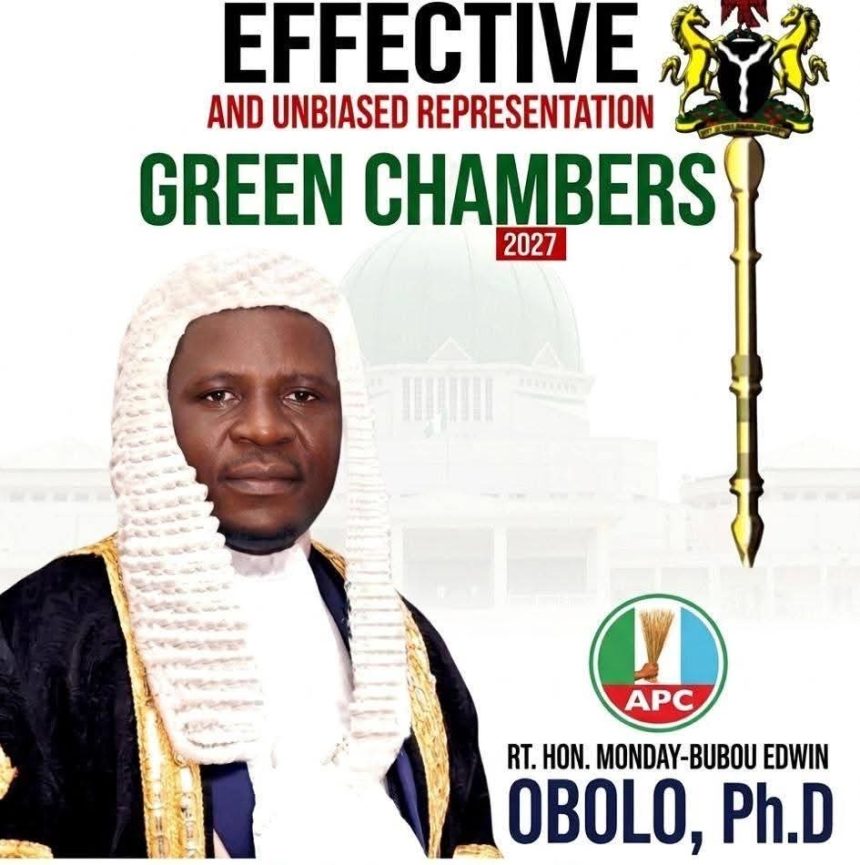
Growing political attention is being directed toward Rt. Hon. Monday-Bubou Edwin Obolo as discussions intensify over representation for the Southern Ijaw Federal Constituency. Obolo, a former legislator, is increasingly being mentioned by supporters as a potential candidate ahead of future elections, with advocates pointing to his experience and community engagement.
Political observers in Bayelsa State say the conversation around leadership in Southern Ijaw has shifted toward candidates with demonstrable records of service. In this context, Obolo’s name has surfaced frequently among local stakeholders and grassroots groups. Supporters describe him as a figure whose past roles in public office have shaped his reputation as an accessible and community-focused leader.
Obolo, who holds a doctoral degree, has previously served in legislative capacities and has been involved in political mobilization within the region. His backers argue that his experience positions him to effectively represent the constituency at the national level. They also point to his history of engaging directly with local communities as evidence of his connection to constituents.
Residents and political actors in Southern Ijaw have highlighted the importance of representation that addresses development challenges in the area. Issues such as infrastructure, economic opportunities, and inclusion remain central to public discourse. According to some supporters, Obolo’s policy interests and outreach efforts align with these priorities.
Analysts note that political messaging around Obolo emphasizes a leadership style described as people-oriented and consultative. Supporters often frame his approach as one that prioritizes listening to constituents and incorporating their concerns into policy advocacy. However, as with any political figure, such claims remain part of broader campaign narratives that will likely face scrutiny as the electoral process evolves.
The Southern Ijaw Federal Constituency, one of the largest in Bayelsa State, has historically played a significant role in regional politics. Representation at the House of Representatives is viewed as critical for influencing federal projects and ensuring that local needs are addressed. As a result, potential candidates are often evaluated based on both their track record and their ability to navigate national legislative processes.
While Obolo’s supporters describe him as a strong contender, the field of potential candidates is expected to include other experienced politicians and emerging figures. Political competition in the constituency is typically robust, with various stakeholders seeking to build alliances and secure voter support ahead of party primaries and general elections.
Local opinion remains varied, with some residents expressing cautious optimism about Obolo’s prospects while others emphasize the need to assess all candidates based on concrete plans and measurable achievements. Political analysts suggest that voter sentiment will ultimately depend on campaign strategies, party dynamics, and the ability of candidates to address pressing local concerns.
As the political landscape continues to develop, Obolo’s profile is likely to remain part of ongoing discussions about leadership in Southern Ijaw. Whether this support translates into formal candidacy and electoral success will depend on multiple factors, including party endorsements and voter engagement in the months ahead.
For now, the attention surrounding Rt. Hon. Monday-Bubou Edwin Obolo reflects broader conversations about governance, accountability, and representation in Southern Ijaw, as constituents look toward future leadership at the national level.