
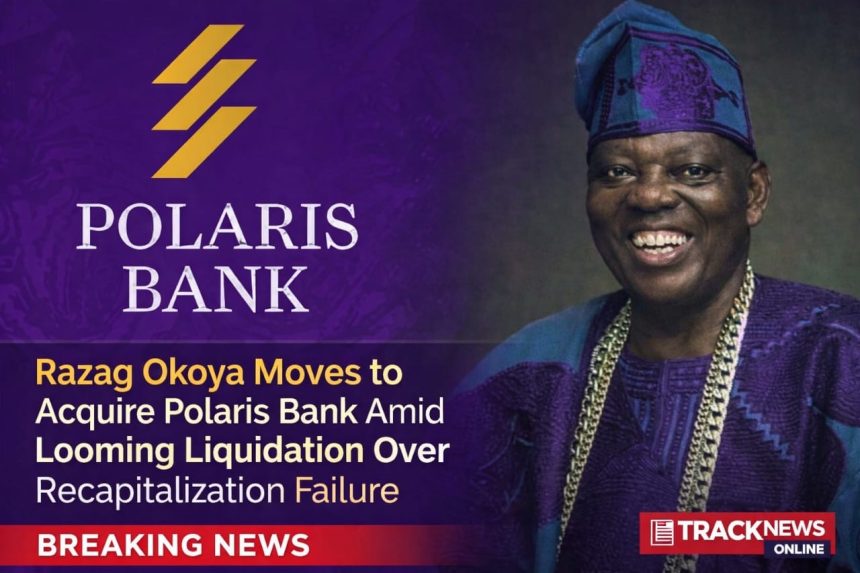
Polaris Bank is facing an imminent liquidation process after failing to meet the Central Bank of Nigeria’s (CBN) recapitalization requirements, raising concerns across the country’s financial sector. The development could lead to the revocation of the bank’s operating license, according to sources familiar with regulatory proceedings.
The Nigeria Deposit Insurance Corporation (NDIC) is expected to take over the bank’s assets and liabilities as part of the liquidation process. This move follows regulatory pressure on financial institutions to strengthen their capital base in line with updated CBN directives aimed at improving the stability of Nigeria’s banking system.
Polaris Bank’s inability to comply with these requirements has placed it among institutions at risk of regulatory sanctions. The CBN has consistently emphasized the need for banks to maintain adequate capital buffers to withstand economic shocks and protect depositors.
Amid the uncertainty, billionaire industrialist Razaq Okoya has reportedly stepped forward with a proposal to acquire the struggling bank. Okoya, a prominent Nigerian businessman and founder of Eleganza Group, is said to be interested in recapitalizing and restructuring Polaris Bank to restore its financial standing.
Sources indicate that Okoya’s bid includes a commitment to inject fresh capital into the bank, ensuring compliance with the CBN’s requirements. His involvement could potentially halt the liquidation process if regulators and stakeholders reach an agreement on the terms of acquisition.
The proposed deal, however, remains subject to approval by the NDIC, the CBN, and existing shareholders. Negotiations are ongoing, and a final decision is expected once all parties review the financial and regulatory implications of the offer.
Industry analysts note that the intervention by a high-profile investor could help preserve jobs and maintain customer confidence in the bank. A successful acquisition would also prevent disruptions in the banking sector, particularly for customers and businesses that rely on Polaris Bank’s services.
Polaris Bank has had a complex history, having emerged from the defunct Skye Bank after regulatory intervention in 2018. Since then, it has operated under regulatory oversight, with efforts made to stabilize its operations and prepare it for eventual privatization.
The current situation highlights ongoing challenges within Nigeria’s banking industry, especially for institutions struggling to meet evolving regulatory standards. The CBN’s recapitalization policy is part of broader reforms aimed at strengthening financial institutions and ensuring long-term economic resilience.
Market observers say the outcome of the Polaris Bank situation could set a precedent for how regulators handle similar cases in the future. It also underscores the importance of strong corporate governance and adequate capitalization in maintaining banking sector stability.
For now, stakeholders are closely watching developments as discussions between Okoya, regulators, and shareholders continue. The final decision will determine whether Polaris Bank is liquidated or given a new lease on life under fresh ownership and capital injection.
If the acquisition proceeds, it could mark a significant turnaround for the bank and reinforce investor confidence in Nigeria’s financial sector.