
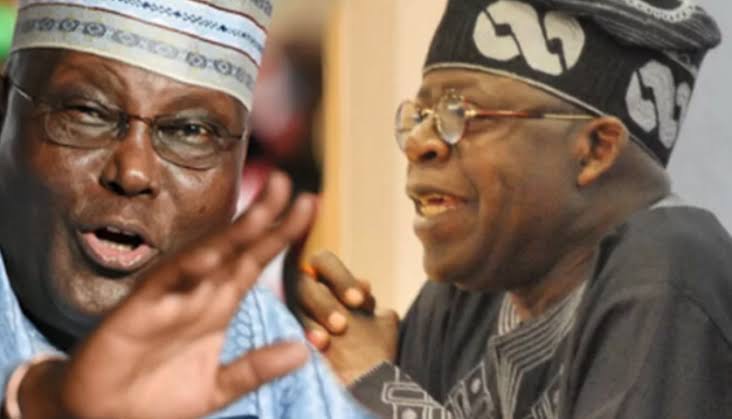
Former Vice President Atiku Abubakar has criticised President Bola Tinubu’s request for Senate approval of a fresh $516 million external loan, cautioning against what he described as “reckless borrowing” amid Nigeria’s growing debt profile.
President Tinubu recently wrote to the Senate seeking approval to secure $516,333,070 through a syndicated loan arrangement. The request was read during plenary by Senate President Godswill Akpabio and has since been referred to the Senate Committee on Local and Foreign Debts for review, with a report expected within one week.
According to details contained in the President’s letter, the loan is to be obtained from Deutsche Bank AG. It will be backed by a partial risk guarantee from the Islamic Corporation for the Insurance of Investment and Export Credit, an arm of the Islamic Development Bank.
The proposed borrowing is intended to finance part of the Sokoto-Badagry Super Highway project. The Federal Government is also expected to provide counterpart funding amounting to N265.5 billion, covering land acquisition, compensation, and related infrastructure needs.
Tinubu explained that the highway project is designed to link Nigeria’s North-West and South-West regions through a 1,000-kilometre high-capacity road. The route will pass through Sokoto, Kebbi, Niger, Kwara, Oyo, Ogun, and Lagos states, stretching from Illela to Badagry.
The President urged lawmakers to grant expeditious approval, describing the project as critical to economic development and national connectivity.
In his remarks during plenary, Senate President Akpabio expressed support for the loan request. He noted that borrowing for infrastructure projects can be justified when such investments have the potential to boost productivity and generate long-term economic benefits.
Akpabio described the highway as a major project capable of enhancing economic activities and saving lives through improved transportation. He urged the relevant committee to fast-track its consideration of the request to enable timely legislative action.
However, Atiku, through a statement issued by his Senior Special Assistant on Public Communication, Phrank Shaibu, raised concerns over the implications of the proposed loan.
He acknowledged the importance of infrastructure development, particularly projects that connect key regions of the country. Despite this, he argued that such initiatives must be backed by transparent financial planning and accountability.
Atiku warned that Nigeria is already burdened by what he termed unsustainable debt levels. He said taking on additional foreign loans without clear terms, cost-benefit analysis, and a credible repayment plan could worsen the situation.
He stressed that development efforts should not come at the cost of fiscal responsibility. According to him, borrowing must be approached with caution to avoid placing undue financial strain on future generations.
The former vice president also referenced concerns surrounding the Lagos-Calabar Coastal Highway project. He noted that the project had attracted criticism over issues related to transparency, procurement processes, and value for money.
He cautioned against repeating what he described as past shortcomings, urging the government to ensure strict adherence to due process in all major infrastructure projects.
Atiku further emphasised that every borrowed fund must be managed with accountability and openness. He said Nigerians expect not only ambitious development projects but also responsible financial decisions that safeguard the country’s economic future.
“Development must not become a euphemism for deepening debt traps,” the statement said, adding that progress built on opacity and unchecked borrowing risks creating long-term economic challenges.
The debate over the loan request highlights ongoing concerns about Nigeria’s fiscal direction, particularly as the government balances infrastructure expansion with debt sustainability.