
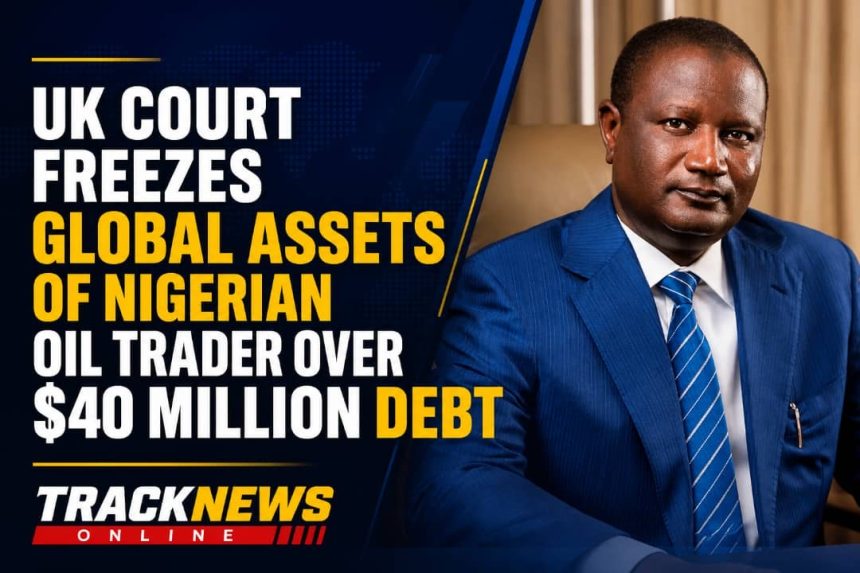
An English High Court has imposed a worldwide asset freeze on Nigerian oil trader Abdulrahman Musa Bashar after he failed to pay a $40 million judgment debt and was accused of attempting to move assets beyond the reach of creditors.
The order, issued on March 30, targets Bashar and his UAE-based company, Ultimate Oil and Gas FZCO. It prevents them from disposing of or dealing with assets globally up to the value of the outstanding debt.
The court said the decision followed evidence of asset sales, incomplete financial disclosures, and conduct suggesting a deliberate effort to avoid repayment.
Bashar, chairman of the Rahamaniyya Group, disclosed holdings across the United Arab Emirates, Nigeria, the United Kingdom, and France valued at approximately $170 million at the time of the ruling.
The case stems from oil trading agreements between 2022 and 2023 involving Petrichor Energy FZCO, a Dubai-based commodities firm. Petrichor supplied gasoil and Jet-A1 aviation fuel to Ultimate Oil and Gas under both spot and term contracts.
According to court filings, Ultimate received the shipments but failed to make full and timely payments, leading Petrichor to initiate legal and arbitration proceedings to recover the debt.
In January 2024, Bashar signed a personal payment agreement and provided a guarantee making him personally liable if his company defaulted. He also issued nine signed but undated cheques as security.
However, Ultimate did not settle the debt, and when the cheques were presented, they were rejected by the bank. By February 2025, the English court entered judgment against both Bashar and his company, leaving about $40 million unpaid.
The court found that Bashar’s actions after the judgment raised serious concerns. Evidence showed he sold multiple properties in the UAE worth about $3.8 million but did not use the proceeds to reduce the debt.
Testimony presented to the court included claims that Bashar warned Petrichor’s managing director he would dispose of assets if repayment terms were not revised. The judge accepted this as evidence of a risk that assets could be deliberately dissipated.
Further concerns arose over undisclosed assets in Nigeria, including petrol stations and a residential property reportedly worth more than $21 million. The court said these omissions suggested a lack of transparency about his financial position.
The presiding judge concluded that the case reflected a refusal to pay rather than an inability to do so.
Bashar has previously faced legal issues in multiple jurisdictions. In 2020, the High Court in England sentenced him to ten months in prison for breaching court orders in a separate dispute involving Sahara Energy Resources.
In January 2025, a Dubai court convicted him in absentia for issuing cheques totaling 126.45 million dirhams that were deemed invalid due to signature discrepancies. He received a one-year prison sentence in that case, which involved a different company.
Legal experts say such disputes highlight risks in oil trading, particularly when transactions are conducted on credit. They note that maintaining control over shipped products and ensuring independent storage arrangements can reduce exposure to default.
Following the freezing order, Petrichor has launched enforcement proceedings in multiple jurisdictions, including the Dubai International Financial Centre courts and Nigerian courts. The strategy is designed to prevent any transfer or concealment of assets.
On April 17, the English court issued an additional injunction requiring two Nigerian companies linked to Bashar to grant Petrichor access to a storage facility in Delta State. The company aims to recover unpaid cargoes stored at the site.
The court warned that failure to comply with the order could result in contempt proceedings and potential criminal liability for Bashar.
Attempts by Bashar and his company to challenge or overturn the freezing order have so far been unsuccessful, and the restrictions remain in place.